

AFL-CIO
The American Federation of Labor-Congress of Industrial Organizations (AFL-CIO) is the largest federation of labor unions in the United States. Formed in 1955 in a merger between the American Federation of Labor and the Congress of Industrial Organizations, the AFL-CIO boasts membership of over 9 million voting members and 3 million associate members.1

While the AFL-CIO retains a large member base, the proportion of the workforce that is organized by labor unions has declined substantially since the 1960s.2 Since 2021, Liz Shuler has led the AFL-CIO; she succeeded controversial late president Richard Trumka after Trumka died in office.
While the union federation has generally supported Democrats and liberal candidates, it was once far more centrist than it has been since an internal power struggle in the mid-1990s. Under former presidents George Meany and Lane Kirkland, the AFL-CIO was staunchly anti-Communist, going so far as to refuse to endorse Democratic presidential candidate Sen. George McGovern in 1972 over McGovern’s opposition to the Vietnam War.3
Under Kirkland’s successor John Sweeney and through Trumka’s terms in office, the union has aligned much more closely with the Democratic Party and the organizational left. After Sweeney took over as the union’s president with Trumka as his chief lieutenant, the AFL-CIO increased its support for liberal politicians and progressive causes, including those unrelated to the economy and collective bargaining.4
This trend only accelerated under Richard Trumka’s leadership. In the AFL-CIO’s 2016 fiscal year, the union reported $45,972,521 in political activities and lobbying (including $8,165,576 in deposits of employee-elected contributions to the union’s political action committee).5 Recipients of AFL-CIO dues-funded contributions include the Center for American Progress (CAP) Action Fund, the Economic Policy Institute (EPI), and the New World Foundation.6 The federation has also proposed admitting progressive groups other than unions, including the NAACP, the Sierra Club, and MomsRising, to its membership as either formal partners or affiliates.7 In 2021, Trumka died in office and was replaced as president by the federation’s secretary-treasurer Liz Shuler.8
Officers and Key Figures
Senior leadership and former leadership of the federation
Member National Unions
National labor unions affiliated with the AFL-CIO
- Laborers’ International Union of North America (LIUNA)
- Unite Here
- American Federation of State, County and Municipal Employees (AFSCME)
- American Federation of Teachers (AFT)
- Actors’ Equity Association (AEA)
- Associated Actors and Artistes of America
- Air Line Pilots Association
- Amalgamated Transit Union
- American Federation of Government Employees (AFGE)
- American Federation of Musicians (AFM)
- American Federation of School Administrators
- American Postal Workers Union
- American Radio Association
- American Train Dispatchers Association
- Bakery, Confectionery, Tobacco Workers and Grain Millers’ International Union (BCTGM)
- International Brotherhood of Electrical Workers (IBEW)
- International Brotherhood of Boilermakers
- Brotherhood of Railroad Signalmen
- Operative Plasterers’ and Cement Masons’ International Association (OPCMIA)
- International Association of Heat and Frost Insulators and Allied Workers
- International Association of Bridge, Structural, Ornamental and Reinforcing Iron Workers (IW)
- International Union of Police Associations
- International Union of Painters and Allied Trades
- International Union of Operating Engineers (IUOE)
- International Longshoremen’s Association
- International Association of Fire Fighters (IAFF)
- International Association of Machinists and Aerospace Workers (IAM)
- International Alliance of Theatrical Stage Employees (IATSE)
- Marine Engineers’ Beneficial Association
- NFL Players Association
- National Air Traffic Controllers Association
- National Association of Letter Carriers
- National Nurses United
- Office and Professional Employees International Union
- SAG-AFTRA
- Seafarers International Union
- Transport Workers Union of America
- United Union of Roofers, Waterproofers and Allied Workers
- United Association (UA)
- United Steelworkers (USW)
- United Auto Workers (UAW)
- United Food and Commercial Workers (UFCW)
- United Mine Workers of America (UMWA)
- Utility Workers Union of America
- Writers Guild of America, East (WGA East)
Subordinate Regional Councils
State and local labor union federations organized under the AFL-CIO banner
- Texas AFL-CIO
- Washington State Labor Council, AFL-CIO
- Virginia AFL-CIO
- Philadelphia Council AFL-CIO
- Rhode Island AFL-CIO
- South Bay AFL-CIO Labor Council
- North Carolina State AFL-CIO
- New York State AFL-CIO
- New Jersey State AFL-CIO
- Minnesota AFL-CIO
- Michigan State AFL-CIO
- Maryland State and D.C. AFL-CIO
- Long Island Federation of Labor, AFL-CIO
- Hudson Valley Area Labor Federation, AFL-CIO
- Broward County AFL-CIO
- Arizona AFL-CIO
- Los Angeles County Federation of Labor
- Chicago Federation of Labor
- California Labor Federation
- Saint Paul Regional Labor Federation
- Northern Virginia Labor Federation
Other Influence Networks

National Labor Relations Act (NLRA)
The National Labor Relations Act (NLRA), commonly known as the Wagner Act after its chief sponsor, then-U.S. Sen. Robert F. Wagner (D-NY), is the principal…
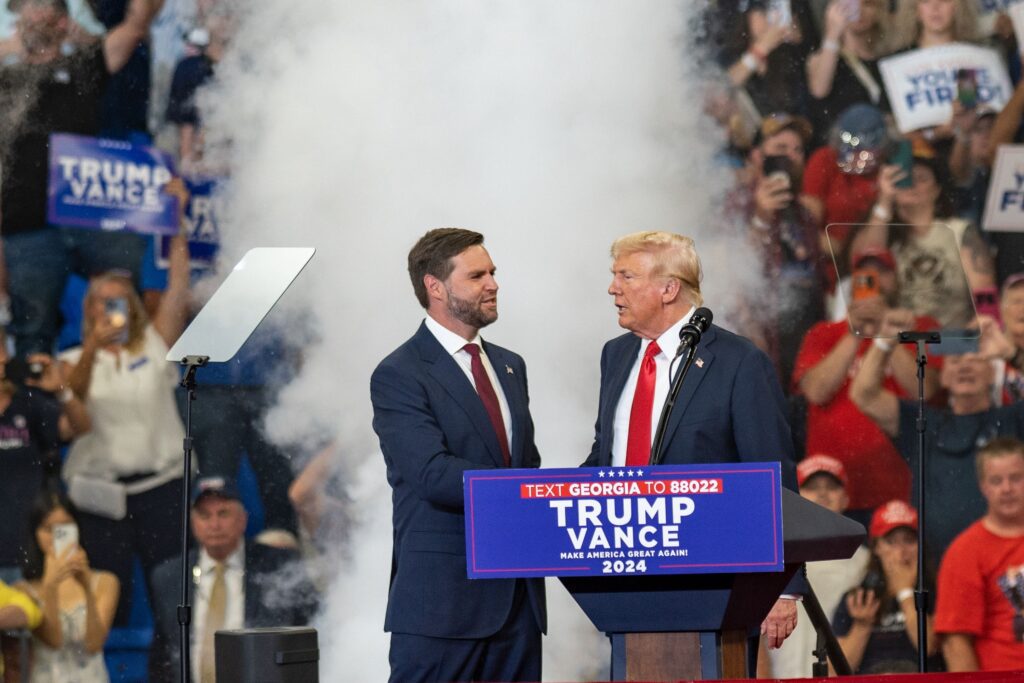
Second Trump Administration
This profile refers to the second presidential administration of Donald Trump that commenced in January 2025 following his second election to the presidency in November…
Associated Groups & People
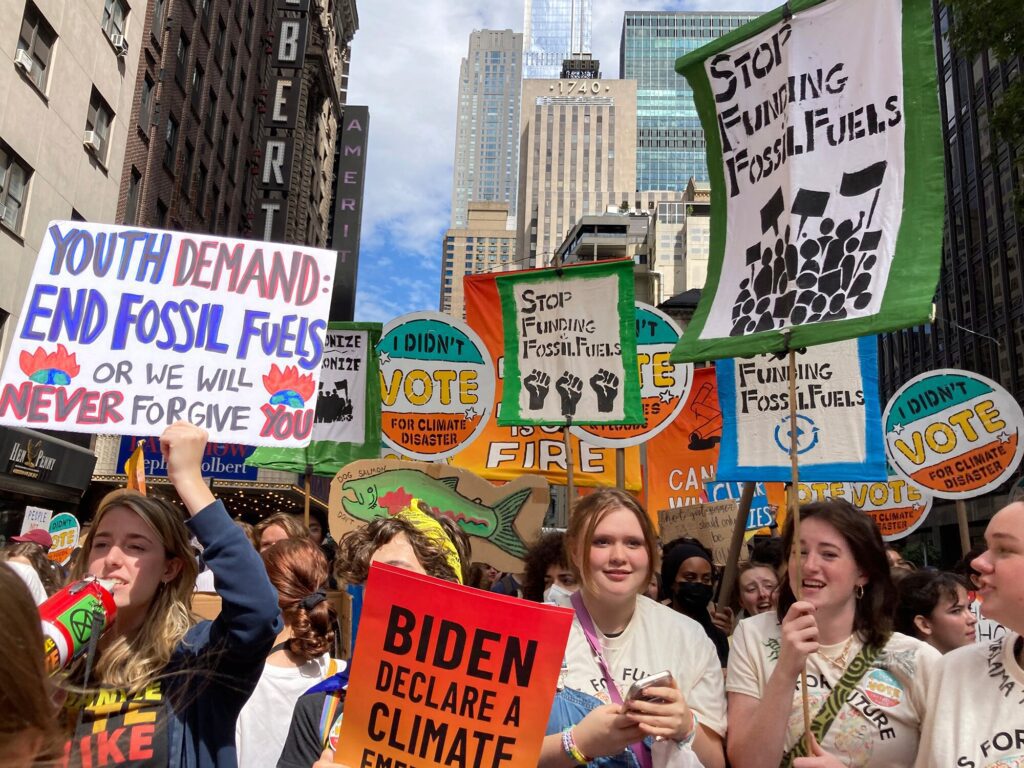
ESG Activism
ESG activism refers to individuals and organizations that advocate for Environmental, Social, and Corporate Governance (ESG) criteria as part of evaluating business operations. ESG considerations…
Associated Groups & People
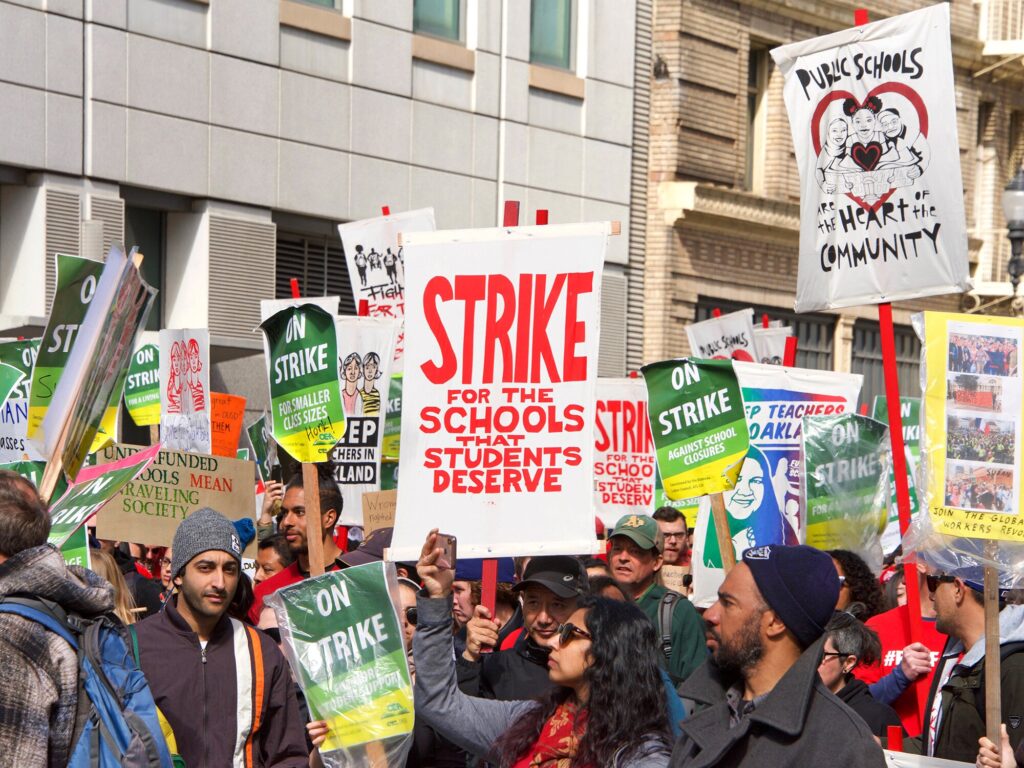
Teachers Unions
Teachers unions, like other government-employee unions, are a key player in the left-of-center infrastructure. The national teachers unions — National Education Association (NEA) and American Federation…
Associated Groups & People
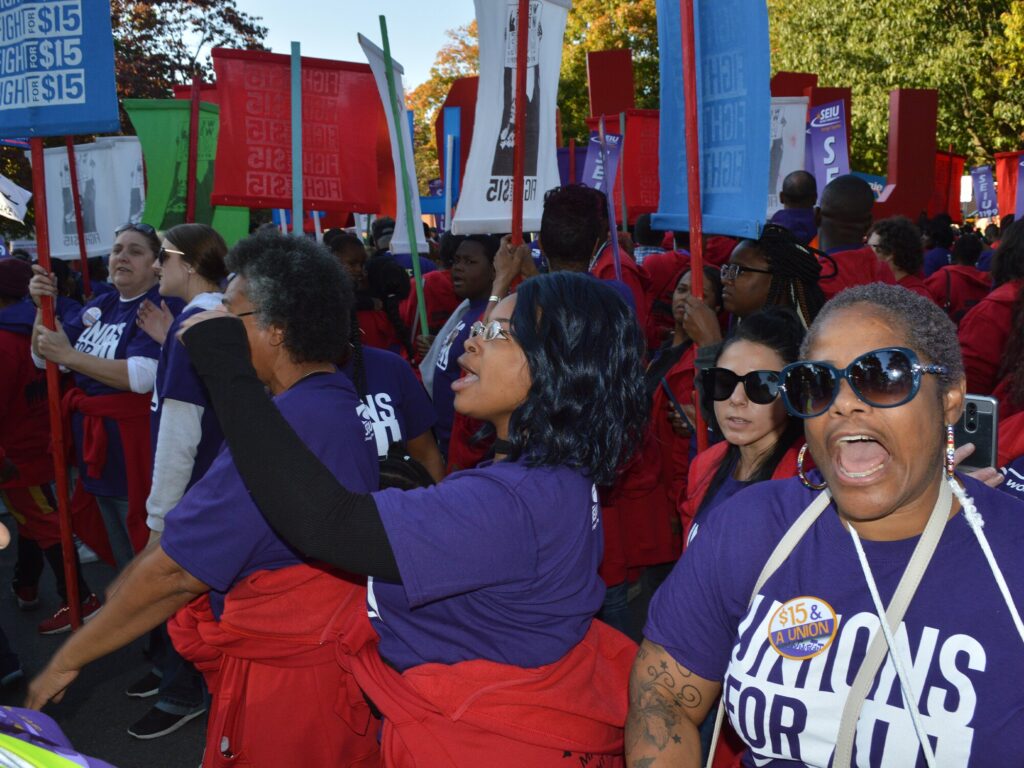
Service Employees International Union
The Service Employees International Union (SEIU) is one of America’s largest, most controversial, and most politically involved labor unions. The SEIU, which represents building services…