


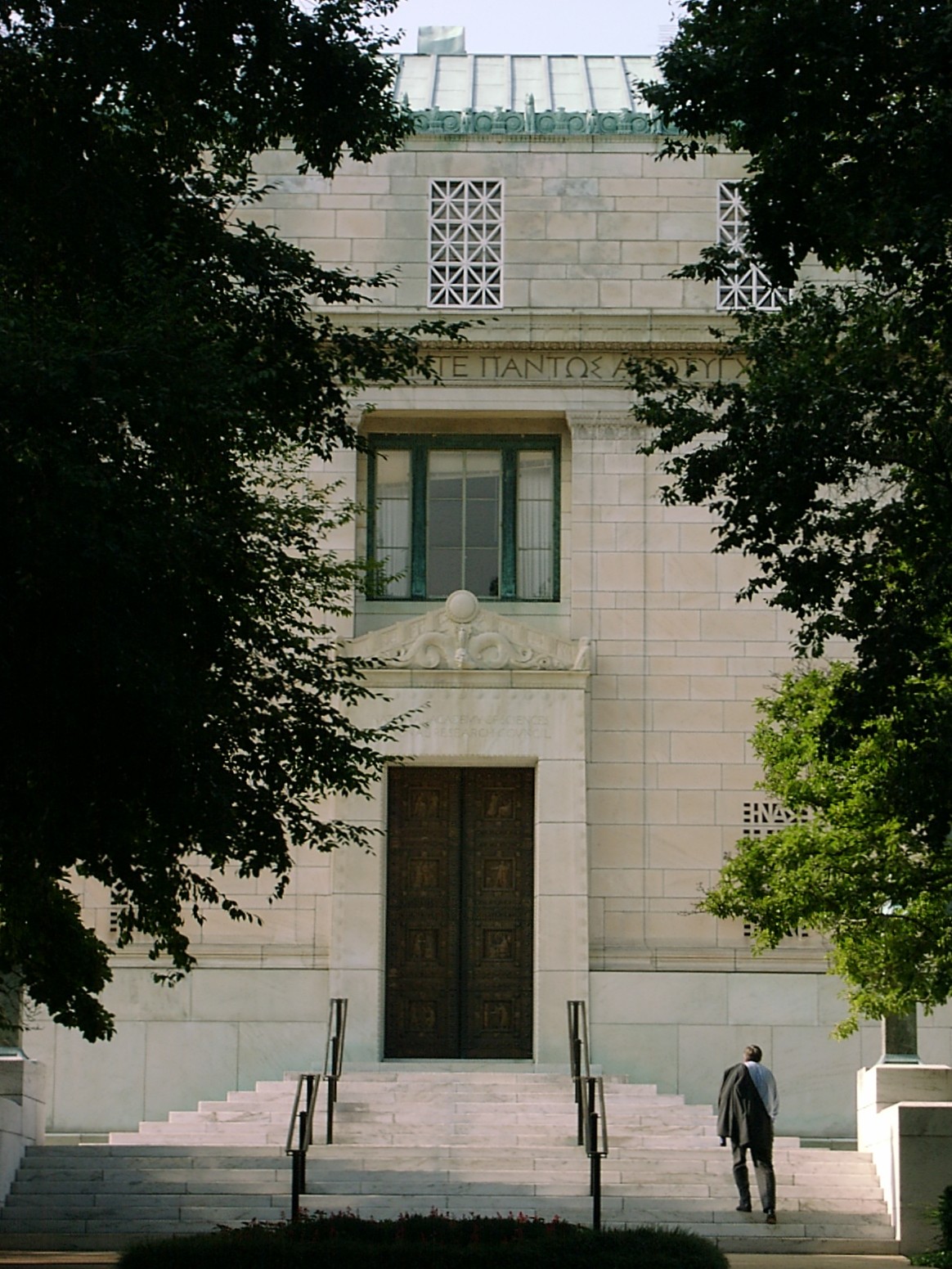

The National Academy of Sciences (NAS) is a membership society that hosts programs and publishes scientific studies in the United States. Established by a Congressional charter in 1863, NAS operates as an independent nonprofit organization that advises the federal government on scientific issues and conducts studies on its behalf. 1
Though NAS is nominally nonpartisan, it frequently promotes left-of-center policy through its scientific journal, the Proceedings of the National Academy of Sciences (PNAS). PNAS has promoted left-of-center ideology on issues including environmentalism, LGBT policy, immigration, and COVID-19 lockdown measures. 2 3 4 5
NAS has faced several controversies in recent years. In January 2021, NAS praised President Joe Biden’s appointment of Eric Lander to the Cabinet-level position of Top Science Adviser, despite Lander’s history of failing to report conflicts of interest and downplaying the role of women in scientific discoveries. 6 Later that year, NAS expelled astronomer Geoffrey Marcy, a member, after an investigation found that he had sexually harassed students for over a decade. 7
NAS has been consistently accused of allowing for conflicts of interest in its studies. In 2006, following a year-long review of NAS committees, the left-of-center Center for Science in the Public Interest (CSPI) found that nearly 20 percent of all scientists on NAS panels had direct financial ties to companies and industry organizations with direct stakes in the outcome of their studies. 8 Of the 320 committee members evaluated, 18 percent had direct conflicts of interest. 9
NAS has received funding from some of the largest left-of-center foundations, including over $143.6 million from the Ford Foundation. Other top contributors include the W.K. Kellogg Foundation ($32.4 million), the Andrew W. Mellon Foundation ($18.9 million), the MacArthur Foundation ($15.9 million), and the Hewlett Foundation ($11.7 million). 10
History
The National Academy of Sciences (NAS) was established in 1863 by the United States Congress through a charter signed by President Abraham Lincoln. NAS was established as an independent nonprofit organization to provide the government with scientific expertise in all areas, including carrying out government-funded experiments and investigations. 11
Over the 20th century, NAS expanded and was frequently called upon by the federal government, especially in times of war. During World War I, President Woodrow Wilson requested the expansion of the academy to ensure increased military preparedness, leading to the establishment of the National Research Center in 1916, which continues to the present day. 12
In 1964, NAS established the National Academy of Engineering under its charter. Six years later, NAS established the Institute of Medicine (now known as the National Academy of Medicine). Together, these organizations form the National Academies of Sciences, Engineering, and Medicine. 13 14
NAS operates independently of the federal government, electing its own members and establishing its own policies and procedures. The organization may receive reimbursement for studies undertaken at the request of the government, but it is not permitted to collect any fees from government agencies. 15 Today, NAS also functions as an honorific society, with election to NAS widely considered to be one of the greatest honors conferred onto an American scientist. 16
Advocacy and Initiatives
National Academy of Sciences often takes left-of-center political stances, mostly through its publications in the Proceedings of the National Academy of Sciences (PNAS). PNAS is NAS’s most well-known program. PNAS is a peer-reviewed journal that is viewed as one of the most prestigious science journals in the country, and it is one of the world’s most-cited scientific serial journals. 17 PNAS has published articles advocating for left-of-center perspectives on race, gender, and environmentalism among other issues.
In addition to PNAS, NAS runs a number of programs for members, including forums between the United States and the United Kingdom and the United States and Israel, award ceremonies for members, labs, public research tools, and scientific cultural programs. 18
LGBT Issues
Despite being an academic organization, NAS has frequently used its research and publications to support left-of-center perspectives on gender. In 2019, PNAS published a study which claimed that the use of “genderless” pronouns “reduce prejudices in favor of men, which fosters views more positive of women, homosexuals and transgender people.” The study was cited as support for several major American companies, including JPMorgan Chase, GM, and Ford, dropping the term “chairman” in favor of “chair” and eliminating pronouns to indicate gender in company titles. 19
NAS has published several other studies supporting left-of-regulations on LGBT issues. NAS published a study which claimed that same-sex couples were 73 percent more likely to be denied a mortgage than straight couples. 20 In 2019, PNAS published a study which claimed that the legalization of same-sex marriage was linked to growing acceptance of LGBT people. 21 That same year, NAS partnered with the left-of-center TransYouth Project and published a study claiming that transgender children have as strong gender identities as cisgender children. 22
NAS has changed its statements on gender in the past two decades. Though it advocates in support of gender transition in the 2020s, in 2001, the organization published a report which claimed that “sex-based differences in biology” heavily influence human functions and behaviors. 23
Environmentalism
NAS is an avid proponent of environmentalism. In April 2021, NAS published a study which claimed that human beings have been changing the global landscape for 12,000 years. The report claimed that modern land use practices, like industrial agriculture, have stripped the world of biodiversity. The report then endorsed at least a partial return to “Indigenous or traditional management” of land. 24
NAS has supported the implementation of environmentalist regulations. In 2016, PNAS published a study which claimed that regulating mercury emissions would result in a net benefit to the American economy by increasing productivity and decreasing the risk of serious medical expenses. 25 In 2021, PNAS released a report claiming that the melting of ice sheets was bringing the planet to a global “tipping point” in climate change and called for rapid regulations to decrease carbon emissions. 26 PNAS has published studies rejecting more conservative proposals to reduce emissions, such as carbon pricing. 27
The academy has attributed natural disasters and increased extreme weather events to man-made climate change, claiming that some events, such as the July 2021 heat wave in the Pacific Northwest, could not possibly have occurred without it. 28 NAS has also argued that man-made climate change has increased the risk of armed conflicts, especially in “ethnically fractionalized” countries, and increased migration from Mexico to the United States. 29 30
Nonetheless, NAS has broken with traditional left-of-center environmentalist organizations by publishing reports in support of geoengineering to prevent global warming, including sending reflective particles into the upper atmosphere to bounce the sun’s heat back into space. 31
COVID-19
Despite acknowledging that pandemic lockdowns have caused major health disruptions, including an increase in mental health concerns among children and young adults, NAS has consistently advocated for strict lockdown-style restrictions during the COVID-19 pandemic, especially in support of mask mandates. 32 PNAS researchers have, however, acknowledged that the global lockdown during the COVID-19 pandemic may have long-term negative implications for human health, including decreased global immunity, increased rates of allergies, and deepening social inequalities. 33
During the global rollout of COVID-19 vaccines, NAS has published studies that support open communication around the negative features of vaccine, claiming that transparency reduces vaccine skepticism. 34
In June 2020, PNAS published an article on the role of face masks in preventing the spread of COVID-19. The authors of the paper claimed that face masks were the most effective way of preventing the spread of COVID-19, minimizing the importance of social distancing. After PNAS published the article, over 40 scientists signed a petition calling for its removal and asserting that there were “egregious errors” in the study. 35
In addition to criticizing the publication itself, prominent scientists criticized the NAS process through which it was approved. Rather than going through the normal review process, in which the journal selects peer reviewers for a submitted article, the article was published through the contributor track, which allows the author of the study to select the paper’s reviewers. Critics alleged that the process resulted in bias and the publication of a paper by PNAS that would not have otherwise been accepted. 36
Despite controversies surrounding the paper, NAS continued to support the use of mask wearing to prevent the spread of COVID-19. 37
In May 2021, NAS published an article by researchers in PNAS which made the controversial claim that sequences of COVID-19 DNA may integrate into the DNA of infected humans, making reinfection possible. Though the article claimed to provide “unambiguous” evidence in support of the theory, its claims were hotly contested by prominent researchers who specialize in retroviruses, while other critics claimed that the paper created unnecessary fear and uncertainty regarding COVID-19 vaccines based on RNA. 38
Marijuana Legalization
NAS plays a central role in the debate over marijuana legalization in the United States. In 2021, bipartisan members of Congress introduced the Marijuana Data Collection Act (MDCA). The act proposed to create a collaborative effort between the NAS and government agencies to evaluate legalized marijuana for the next 10 years in order to evaluate potential costs and benefits. As of July 2021, the bill has not been put to a vote. 39
NAS has published research that is not favorable to marijuana legalization. In 2021, PNAS published a study which found that a twin that uses more marijuana than his or her sibling as a teenager is less likely to secure a highly skilled job due to the ways in which marijuana interferes with education. The report argued that teenagers using marijuana had more discipline problems, lower GPAs, and less academic motivations than those who did not. 40
In 2017, NAS published a report alleging that cannabis use is associated with the development of schizophrenia, psychosis, and other mental health disorders in adolescents and young adults. 41 Nonetheless, an NAS study that same year found that marijuana is effective in treating chronic pain for adults. 42
Immigration
NAS has promoted left-of-center perspectives on immigration. In 2016, PNAS published an influential report which claimed that immigrants increase long-term economic growth in destination countries and help their economies avoid stagnation. 43
In 2020, PNAS published a study which argued that illegal immigrants commit fewer crimes on average than those legally within the United States. 44 The study claimed that U.S.-born citizens are over 2 times more likely to be arrested for violent crimes, 2.5 times more likely to be arrested for drug crimes, and over 4 times more likely to be arrested for property crimes. Though it generalized its results to the entire United States, the report based its findings on data which came exclusively from Texas. 45
Controversies
Conflict of Interest and Bias Allegations
In 2006, the left-of-center Center for Science in the Public Interest (CSPI) published a report alleging that NAS consistently allowed for conflicts of interest in its work. Following a year-long review of 21 NAS committees, CSPI found that nearly 20 percent of all scientists on NAS panels had direct financial ties to companies and industry organizations with direct stakes in the outcome of their studies. 46
Of the 320 committee members evaluated, 18 percent had direct conflicts of interest involved in their studies. These included an Institute of Medicine panelist whose research was funded by the National Food Processers Association and the United States Tuna Foundation tasked with evaluating the risk of mercury in fish. In another case, 10 of the 11 total panelists on a committee studying carbon emissions had direct ties to oil, energy, and chemical industries, most of which were not disclosed. 47
The CSPI report also found that nearly half of all panels featured in the study included scientists with easily identifiable biases that were not offset by scientists of opposing viewpoints and urged the academy to strengthen its policies on bias and conflict and interests. 48
In 2012, the NAS was accused of having a broad political bias after it rejected prominent Republican physicist Jay Keyworth, who worked in the Reagan administration, from a panel. When asked why Keyworth was excluded, the then-NAS president claimed that the organization did not want to go back that far in the history of presidential administrations, despite the fact that a Carter administration alumnus sat on the same panel. 49
In 2015, NAS faced further opposition for allegedly silencing scientific dissent. The similarly named National Academy of Scholars, an organization of professors in the humanities and social sciences, sent a letter to NAS members urging them to nominate someone other than Marcia McNutt to become NAS president. The academy claimed that McNutt was central to three controversies in which she dismissed serious scientific dissent, even on issues intimately related to public policy issues such as chemical and radiation storage. 50
Eric Lander Controversy
In January 2021, President Joe Biden announced that he had chosen geneticist Eric Lander to serve as Top Science Advisor, which he elevated to a Cabinet-level position. NAS president Marcia McNutt praised the announcement as an “inspired choice” for the position, despite Lander’s controversial history in the scientific community. 51
Between 1998 and 2001, Lander attacked the Celera project, which sought to sequence the entire human genome and was led by one of his rivals. Lander frequently attacked the successful project, claiming that its methods were invalid in public while quietly attempting to strike deals with the company in charge of the initiative. Lander’s public attacks became so pronounced that he began to be called “Eric Slander” by Celera employees. 52
Lander has also been accused of failing to report conflicts of interest, downplaying the role of women in scientific discoveries, and celebrating scientists with histories of making racist and sexist comments. 53
Sexual Harassment
In 2019, NAS changed its longstanding policy from electing members to lifetime positions to allow for the expulsion of members who engage in sexual harassment, discrimination, and bullying. Prior to the policy change, NAS could only ask members to resign. 54
The policy change came on the heels of two NAS members, Geoffrey Marcy and Thomas Jessell, admitting to sexually harassing students or engaging in inappropriate sexual relationships with them. NAS had previously been criticized as hypocritical after publishing a report calling for sweeping regulations to end harassment in the scientific community while not expelling members for sexually harass students on campus. NAS expelled Marcy in May 2021. 55
Funding
In 2019, NAS reported receiving $406,416,247 in revenue and paying out $339,454,609 in expenses. The academy also reported over $1.1 billion in net assets. 56
NAS’s top 10 funders include some of the largest, most influential charities in the United States. The largest donor by far to the NAS is the Ford Foundation, which has contributed over $143.6 million to NAS since 1970. Other top contributors include the W.K. Kellogg Foundation ($32.4 million), the Andrew W. Mellon Foundation ($18.9 million), the MacArthur Foundation ($15.9 million), and the Hewlett Foundation ($11.7 million). 57
The Sloan Foundation, the Bill and Melinda Gates Foundation, Arnold Ventures, the Nathan Cummings Foundation, and the Walton Family Foundation have also made significant contributions to NAS. 58 59
In 2016, the Simons Foundation gave a $10 million grant to NAS in order to increase the endowment fund established to fund NAS programs and studies dedicated to facing national challenges. 60
Leadership
The National Academy of Sciences is governed by a 17-member council, which features 5 officers and 12 councilors elected from NAS membership. 61 Geophysicist Marcia McNutt is NAS president, having worked in the role since 2016. McNutt was previously the editor-in-chief of the Science family of journals and worked as director of the U.S. Geological Survey (USGS) from 2009 to 2013. Prior to joining USGS, McNutt worked in a number of research roles. 62
While at Science, McNutt came under fire for allegedly supporting sexist stereotypes about female scientists. In 2014, McNutt faced criticism for running an article entitled “Staying a Step Ahead of HIV/AIDS” with a photo of two transgender women in short dresses with their heads cropped out of the photo. The following year, McNutt published an advice column in which the columnist counseled a young scientist to “put up with” sexual harassment from her boss, sparking widespread blowback once again. 63
References
- Halpern, Jack. “The U.S. National Academy of Sciences-In Service to Science and Society.” PNAS. National Academy of Sciences. March 4, 1997. https://www.pnas.org/content/94/5/1606.
- Turner, Ben. “Climate ‘Tipping Points’ Could Push Us Past the Point-of-No-Return after Less than 2 Degrees of Warming.” LiveScience. Purch. June 12, 2021. https://www.livescience.com/climate-domino-effects-close.html
- “GM and Ford Adopt Gender-Neutral Terms to Identify the Presidency.” Market Research Telecast. July 13, 2021. https://marketresearchtelecast.com/gm-and-ford-adopt-gender-neutral-terms-to-identify-the-presidency/100922/.
- “Boebert Introduces Resolution to Censure Biden over Southern Border Policies.” Durango Herald. June 30, 2021. https://www.durangoherald.com/articles/boebert-introduces-resolution-to-censure-biden-over-southern-border-policies/.
- Irfan, Umair. “What a Controversial Face Mask Study Says about Science in the Covid-19 Era.” Vox. June 29, 2020. https://www.vox.com/2020/6/29/21302489/coronavirus-face-mask-covid-19-pnas-study.
- Aldhous, Peter. “Meet Eric Lander, Biden’s Pick For Science Adviser And A Polarizing Figure.” BuzzFeed News. January 21, 2021. https://www.buzzfeednews.com/article/peteraldhous/eric-lander-biden-science-adviser.
- Hauser, Christine. “Science Academy Pushes to Eject Sexual Harassers.” New York Times. May 2, 2019. https://www.nytimes.com/2019/05/02/science/national-academy-sciences-sexual-harassment.html
- “Are the National Academies Fair and Balanced?” Center for Science in the Public Interest. July 24, 2006. https://cspinet.org/new/200607241.html.
- “Are the National Academies Fair and Balanced?” Center for Science in the Public Interest. July 24, 2006. https://cspinet.org/new/200607241.html.
- “National Academy of Sciences Donations Received.” Vipul Naik. Accessed July 18, 2021. https://donations.vipulnaik.com/donee.php?donee=National%2BAcademy%2Bof%2BSciences.
- Halpern, Jack. “The U.S. National Academy of Sciences-In Service to Science and Society.” National Academy of Sciences. March 4, 1997. https://www.pnas.org/content/94/5/1606.
- Halpern, Jack. “The U.S. National Academy of Sciences-In Service to Science and Society.” National Academy of Sciences. March 4, 1997. https://www.pnas.org/content/94/5/1606.
- Halpern, Jack. “The U.S. National Academy of Sciences-In Service to Science and Society.” National Academy of Sciences. March 4, 1997. https://www.pnas.org/content/94/5/1606.
- “The National Academies of Science, Engineering, and Medicine.” nationalacademies.org. Accessed July 18, 2021. https://www.nationalacademies.org/.
- Halpern, Jack. “The U.S. National Academy of Sciences-In Service to Science and Society.” National Academy of Sciences. March 4, 1997. https://www.pnas.org/content/94/5/1606.
- Halpern, Jack. “The U.S. National Academy of Sciences-In Service to Science and Society.” National Academy of Sciences. March 4, 1997. https://www.pnas.org/content/94/5/1606.
- “PNAS: General Information.” National Academy of Sciences. Accessed July 18, 2021. http://www.nasonline.org/publications/pnas/.
- Awards Home. National Academy of Sciences. Accessed July 18, 2021. http://www.nasonline.org/programs/awards/.
- “GM and Ford Adopt Gender-Neutral Terms to Identify the Presidency.” Market Research Telecast. July 13, 2021. https://marketresearchtelecast.com/gm-and-ford-adopt-gender-neutral-terms-to-identify-the-presidency/100922/.
- Lavietes, Matthew. “U.S. Banks Banned from Discriminating against LGBT+ People.” Reuters. March 16, 2021. https://www.reuters.com/article/us-usa-lgbt-banks-idUSKBN2B82TQ.
- Ryan, Kate. “U.S. Legalization of Same-Sex Marriage Linked to Growing Acceptance: Study.” Reuters. April 16, 2019. https://www.reuters.com/article/us-usa-lgbt-bias-idUSKCN1RS2CT
- Eckart, Kim. “Among Transgender Children, Gender Identity as Strong as in Cisgender Children, Study Shows.” UW News. November 18, 2019. https://www.washington.edu/news/2019/11/18/among-transgender-children-gender-identity-as-strong-as-in-cisgender-children-study-shows/
- Anderson, Ryan. “After Inaugural Rhetoric on Unity, Biden Signs Divisive Transgender Executive Order.” Heritage Foundation. January 21, 2021. https://www.heritage.org/gender/commentary/after-inaugural-rhetoric-unity-biden-signs-divisive-transgender-executive-order.
- Leclerc, Emily. “New Study Pushes Origins of Human-Driven Global Change Back Thousands of Years.” Smithsonian.com. April 19, 2021. https://www.smithsonianmag.com/blogs/national-museum-of-natural-history/2021/04/19/new-study-pushes-origins-human-driven-global-change-back-thousands-years/.
- Eckley Selin, Noelle, and Amanda Giang. “Are Tighter EPA Controls on Mercury Pollution Worth It?” The Conversation. May 28, 2021. https://theconversation.com/are-tighter-epa-controls-on-mercury-pollution-worth-it-53551.
- Turner, Ben. “Climate ‘Tipping Points’ Could Push Us Past the Point-of-No-Return after Less than 2 Degrees of Warming.” LiveScience. June 12, 2021. https://www.livescience.com/climate-domino-effects-close.html
- Rosenbloom, Daniel, Jochen Markard, Frank W. Geels, and Lea Fuenfschilling. “Opinion: Why Carbon Pricing Is Not Sufficient to Mitigate Climate Change-and How ‘Sustainability Transition Policy’ Can Help.” National Academy of Sciences. April 21, 2020. https://www.pnas.org/content/117/16/8664.
- Northwest Heat Wave Impossible without Climate Change, Study Finds.” NBCNews.com. July 8, 2021. https://www.nbcnews.com/science/environment/northwest-heat-wave-impossible-climate-change-study-finds-rcna1366.
- “Climate and Environmental Conflicts.” Organization for World Peace. July 16, 2021. https://theowp.org/crisis_index/climate-and-environmental-conflicts/.
- Lustgarten, Abrahm. “The Great Climate Migration Has Begun.” New York Times. July 23, 2020. https://www.nytimes.com/interactive/2020/07/23/magazine/climate-migration.html.
- Berwyn, Bob. “Should Solar Geoengineering Be a Tool to Slow Global Warming, or Is Manipulating the Atmosphere Too Dangerous?” Inside Climate News, March 27, 2021. https://insideclimatenews.org/news/26032021/should-solar-geoengineering-be-a-tool-to-slow-global-warming-or-is-manipulating-the-atmosphere-too-danger.
- “COVID-19 Pandemic and Racial Trauma Have Caused Unprecedented Disruption Among Youth; School-Based Supports Can Help Address Mental Health Concerns.” National Academies. July 8, 2021. https://www.nationalacademies.org/news/2021/07/covid-19-pandemic-and-racial-trauma-have-caused-unprecedented-disruption-among-youth-school-based-supports-can-help-address-mental-health-concerns.
- Kane, Laura Dhillon. “Isolation and Sanitation during COVID-19 May Affect Human Microbiome, Scientists Say.” CTV News. February 21, 2021. https://www.ctvnews.ca/health/coronavirus/isolation-and-sanitation-during-covid-19-may-affect-human-microbiome-scientists-say-1.5317868.
- Henderson, Emily. “Open Talk about Negative Features of COVID-19 Vaccines Increases Trust.” News-Medical.net, July 9, 2021. https://www.news-medical.net/news/20210709/Open-talk-about-negative-features-of-COVID-19-vaccines-increases-trust.aspx.
- Irfan, Umair. “What a Controversial Face Mask Study Says about Science in the Covid-19 Era.” Vox. June 29, 2020. https://www.vox.com/2020/6/29/21302489/coronavirus-face-mask-covid-19-pnas-study.
- Irfan, Umair. “What a Controversial Face Mask Study Says about Science in the Covid-19 Era.” Vox. June 29, 2020. https://www.vox.com/2020/6/29/21302489/coronavirus-face-mask-covid-19-pnas-study.
- Larman, Connor. “What the New Rules on Facemasks Could Be – and Should We Continue Wearing Them?” The Northern Echo. July 12, 2021. https://www.thenorthernecho.co.uk/news/19436268.continue-wearing-facemasks-july-19-covid-restriction-lifting/
- Cohen, Jon. “Further Evidence Supports Controversial Claim That SARS-CoV-2 Genes Can Integrate with Human DNA.” Science. May 7, 2021. https://www.sciencemag.org/news/2021/05/further-evidence-offered-claim-genes-pandemic-coronavirus-can-integrate-human-dna.
- Foster, Alexandria M., and Kendall A. Schnurpel. “Congress Reintroduces Marijuana Data Collection Act: Reevaluating Federal Marijuana Policy.” Lexology. June 28, 2021. https://www.lexology.com/library/detail.aspx?g=490b59a2-5d44-493f-9433-2de23603bb3b.
- “Teen Pot Use Could Mean Less Success as Adult.” Consumer Health News. March 29, 2021. https://consumer.healthday.com/3-29-pot-use-in-teens-could-mean-less-success-as-adult-study-2651198167.html.
- Cummings, William. “Nebraska Gov. Ricketts Warns: ‘If You Legalize Marijuana, You’re Going to Kill Your Kids.’” USA Today. March 13, 2021. https://eu.usatoday.com/story/news/politics/2021/03/12/nebraska-gov-pete-ricketts-legal-marijuana-kill-your-kids/4663466001/.
- Inhaled Cannabis Associated with Significant Reductions in Self-Reported Pain Severity.” NORML. May 27, 2021. https://norml.org/news/2021/05/27/inhaled-cannabis-associated-with-significant-reductions-in-self-reported-pain-severity/.
- Moore, Stephen, and David Simon. “Immigrants Do Not Steal Our Jobs, They Create Them in the Economy.” The Hill. April 5, 2021. https://thehill.com/opinion/immigration/545572-immigrants-do-not-steal-our-jobs-they-create-them-in-the-economy.
- Salcedo, Jeff. “Opinion: Immigrants Are Human Beings, Not a Political Agenda.” The Daily Universe. July 6, 2021. https://universe.byu.edu/2021/06/28/opinion-immigrants-are-human-beings-not-a-political-agenda/.
- Boebert Introduces Resolution to Censure Biden over Southern Border Policies.” Durango Herald. June 30, 2021. https://www.durangoherald.com/articles/boebert-introduces-resolution-to-censure-biden-over-southern-border-policies/
- “Are the National Academies Fair and Balanced?” Center for Science in the Public Interest. July 24, 2006. https://cspinet.org/new/200607241.html.
- “Are the National Academies Fair and Balanced?” Center for Science in the Public Interest. July 24, 2006. https://cspinet.org/new/200607241.html.
- “Are the National Academies Fair and Balanced?” Center for Science in the Public Interest. July 24, 2006. https://cspinet.org/new/200607241.html.
- Campbell, Hank. “Political Bias In The National Academy of Sciences?” Science 2.0, August 27, 2014. https://www.science20.com/cool-links/political_bias_national_academy_sciences-90367.
- Wood, Peter. “Concerns about National Academy of Sciences and Scientific Dissent.” National Association of Scholars. December 15, 2015. https://www.nas.org/blogs/article/nas_letter.
- Aldhous, Peter. “Meet Eric Lander, Biden’s Pick For Science Adviser And A Polarizing Figure.” BuzzFeed News. January 21, 2021. https://www.buzzfeednews.com/article/peteraldhous/eric-lander-biden-science-adviser.
- Aldhous, Peter. “Meet Eric Lander, Biden’s Pick For Science Adviser And A Polarizing Figure.” BuzzFeed News. January 21, 2021. https://www.buzzfeednews.com/article/peteraldhous/eric-lander-biden-science-adviser.
- Aldhous, Peter. “Meet Eric Lander, Biden’s Pick For Science Adviser And A Polarizing Figure.” BuzzFeed News. January 21, 2021. https://www.buzzfeednews.com/article/peteraldhous/eric-lander-biden-science-adviser.
- Hauser, Christine. “Science Academy Pushes to Eject Sexual Harassers.” New York Times. May 2, 2019. https://www.nytimes.com/2019/05/02/science/national-academy-sciences-sexual-harassment.html.
- Hauser, Christine. “Science Academy Pushes to Eject Sexual Harassers.” New York Times. May 2, 2019. https://www.nytimes.com/2019/05/02/science/national-academy-sciences-sexual-harassment.html.
- National Academy of Sciences.” Return of Organization Exempt from Income Tax (Form 990) 2019. Part I.
- “National Academy of Sciences Donations Received.” Vipul Naik. Accessed July 18, 2021. https://donations.vipulnaik.com/donee.php?donee=National%2BAcademy%2Bof%2BSciences.
- “National Academy of Sciences Donations Received.” Vipul Naik. Accessed July 18, 2021. https://donations.vipulnaik.com/donee.php?donee=National%2BAcademy%2Bof%2BSciences.
- “National Academy of Sciences.” Carnegie Corporation of New York. Accessed July 18, 2021. https://www.carnegie.org/grants/grants-database/grantee/national-academy-of-sciences/#!/grants/grants-database/grant/172189176.0/.
- “National Academy of Sciences Receives $10 Million Challenge Grant.” Philanthropy News Digest. May 5, 2016. https://philanthropynewsdigest.org/news/national-academy-of-sciences-receives-10-million-challenge-grant.
- “Leadership and Governance.” National Academy of Sciences. Accessed July 18, 2021. http://www.nasonline.org/about-nas/leadership/nas-council.html.
- “Marcia McNutt.” National Academy of Sciences. Accessed July 18, 2021. http://www.nasonline.org/member-directory/members/52683.html.
- Thinking, Megan. “Science’s Marcia McNutt, Trailblazer for Women, Encounters Sexism Scandal.” STAT. April 19, 2018. https://www.statnews.com/2015/11/19/marcia-mcnutt/.