


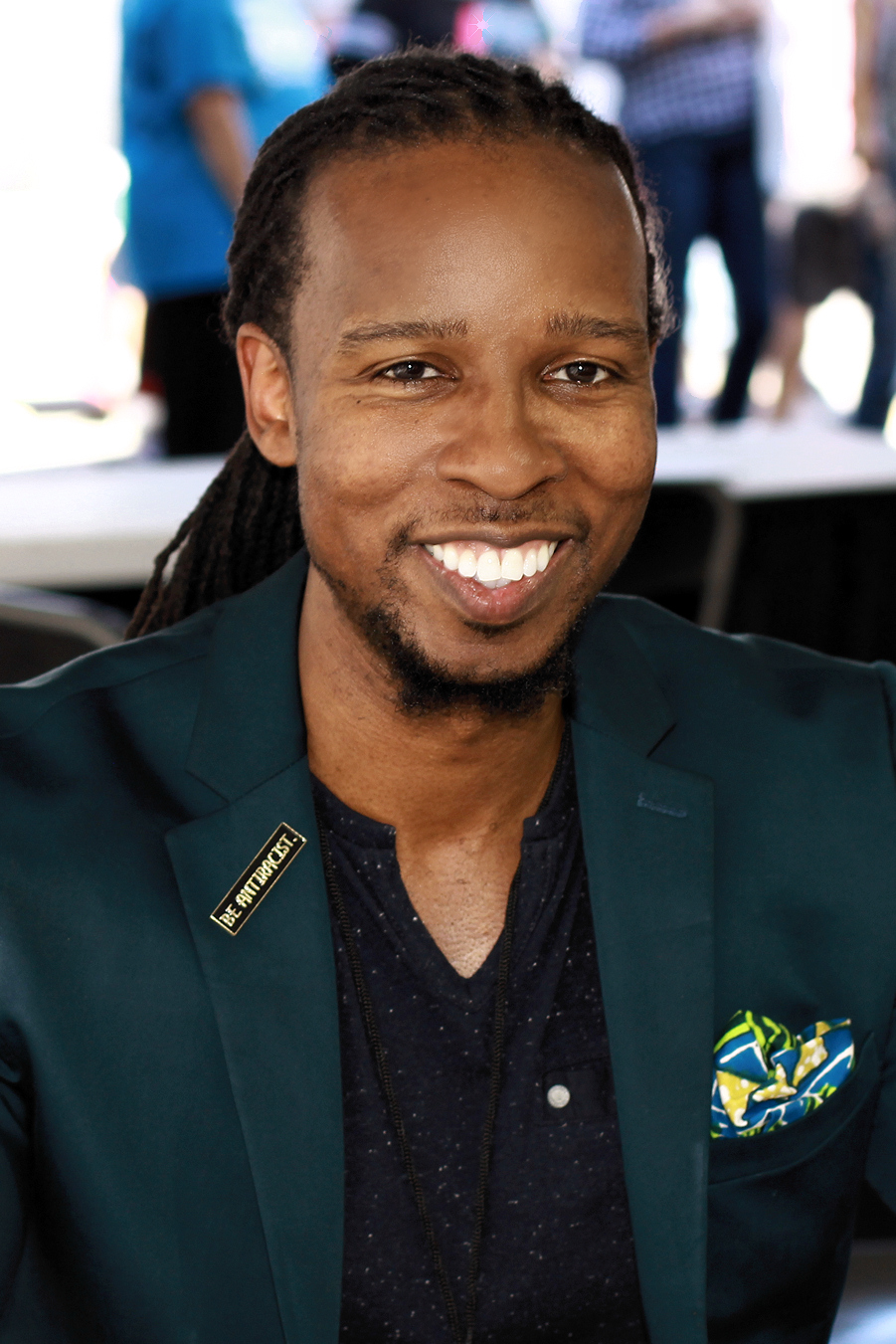

Ibram X. Kendi is a professor, activist, and author most known for pioneering the radical-left ideology of “antiracism,” which claims that any racial inequalities are inherently the result of racist policies. Kendi has argued that there is no such thing as being “non-racist,” and that in order to avoid being racist, individuals must actively combat racism by promoting left-of-center policies. 1 Kendi has claimed that other approaches to racial inequality, such as race-blind policymaking or an emphasis on individual responsibility, are inherently racist. 2 Scholars have come out in opposition to Kendi’s ideology, arguing that such a broad definition of racism casts some of America’s leading African-American activists, including Frederick Douglass and W.E.B. Du Bois, as racists. 3
Kendi has written several books on his theory, including How to Be an Antiracist and Antiracist Baby, a children’s picture book designed to teach infants and children under four left-of-center critical race theory. 4 Kendi has advocated for his theory to become a central part of the American K-12 education system, arguing that racism is so fundamental to the United States that his political-economic program should be taught to children as young as preschoolers. 5 Kendi recently signed a deal with Netflix to promote his ideology in three film and television projects. 6 7
Kendi has called for the immediate implementation of a number of left-wing policies at the federal level, including reparations payments to African Americans for American slavery, the removal of police funding, universal basic incomes, online voting, government-controlled healthcare, need-based school funding, complete student debt forgiveness, and the Green New Deal. 8 Kendi has been endorsed by a number of prominent left-of-center and radical-left political figures, including controversial professor Cornel West, Democratic activist and former political candidate Stacey Abrams, Poor People’s Campaign director William J. Barber II, Black Lives Matter co-founder and self-proclaimed Marxist Alicia Garza, and 1619 Project author Nikole Hannah-Jones. 9 10 11
In 2020, Kendi equated right-of-center policies and beliefs with “genocide, enslavement, inequality, voter suppression, bigotry, cheating, lies, individualism, exploitation, denial, and indifference to it all.” 12 Kendi has gone so far as to propose a constitutional amendment that would ban “racism” by imposing mass government regulatory standards to enforce Kendi’s antiracist ideologies. The amendment would make racial inequity unconstitutional, ban public officials from having “racist ideas,” and permanently fund a United States Department of Anti-racism that would have oversight over all local, state, and federal public policies to ensure they are not “racist” and be allowed to discipline public officials if they “do not voluntarily change their racist policy and ideas.” 13
Early Life and Academic Career
Kendi was born Ibram Henry Rodgers in Queens, New York to a tax accountant and a healthcare business analyst, both of whom participated in the left-of-center “liberation theology” movement in the 1960s. In 1997, at age 15, Kendi moved to Manassas, Virginia. 14
Kendi claims that he himself used to be “racist” for promoting the idea of African American individual work ethic to achieve success, winning a speech contest by arguing that African American youth should take responsibility for the failures of African American communities and embrace the idea of personal responsibility. Kendi has claimed that the memory “haunts” him and that the speech contained “racist ideas disguised as middle-class striving,” condemning the ideas of Booker T. Washington that encouraged African Americans to engage in projects of self-improvement to rise up in society. 15
During his time in college at Florida A&M, Kendi embraced left-wing racial politics, claiming that he would only date “dark-skinned Black women” and promoting a conspiracy theory that all white people were aliens from outer space. 16
After marrying his wife, emergency physician Sadiqa Kendi, Kendi dropped his last name to adopt the Kenyan surname Kendi and dropped his middle name, claiming that it was associated with Prince Henry the Navigator, who supported the slave trade in the 15th century. In 2017, Kendi was diagnosed with colon cancer, which he eventually overcame. Kendi has claimed that the “personal trauma of going through libraries of literature on the worst things that have ever been said about Black people” may have caused his cancer. 17
After graduating from college, Kendi pursued an unsuccessful career in journalism before enrolling in a Ph.D. program in African American studies at Temple University. There, Kendi began to advocate against “assimilationist” ideas that stressed that African Americans should strive towards success in a multiracial society, claiming that such ideas were “inherently racist.” 18 After struggling to find any academic jobs following his graduation, Kendi became an assistant professor at the University of Florida. After winning the National Book Award in 2016 for Stamped from the Beginning, a book which argues that American history is built on fundamentally racist policies, Kendi shot to national fame. 19
Following Kendi’s national recognition, he accepted visiting teaching positions with Brown University and Rutgers University and received fellowships and grants from the University of Chicago, Wayne State University, Emory University, Duke University, Princeton University, and the University of California, Los Angeles. Kendi also received fellowships from the Library of Congress, the National Academy of Education, and the Lyndon B. Johnson Library and Museum. 20 Kendi became a full professor at American University, where he helped to lead the Antiracist Research and Policy Center. 21
Kendi currently sits as the Boston University Andrew W. Mellon Professor in the Humanities, where he founded and runs the Center for Antiracist Research. 22
‘Antiracist’ Ideology
Kendi rose to fame for founding and promoting the ideology of so-called “antiracism,” which claims that it is not enough to decry racist practices and argues that there is no such thing as “not racist” or “race-neutral.” 23 24 Instead, Kendi’s philosophy demands that individuals “commit” to combatting racism every single day, fighting in support of left-of-center political causes to fix purported racial inequalities. 25 The theory also claims that racial inequalities are artificial and imposed by racist institutions and policies, and Kendi has argued that assigning responsibility for racial inequality to individual or group behaviors is “racist.” 26 Kendi has further claimed that “a racist policy is any policy that leads to inequity, and antiracist policy is the opposite.” 27
Kendi has argued that all behavior is either segregationist, assimilationist, or antiracist. His theory condemns any race-blind policy implementation and argues that only antiracist behavior, which acknowledges race and condemns any efforts towards racial assimilation, is acceptable. 28 Other scholars have opposed Kendi’s work and broad definition of “racism,” claiming that it accuses seminal African American figures, including Frederick Douglass, W.E.B. Du Bois, and former President Barack Obama, of being racist. 29
In 2020, Time magazine named Kendi as one of the 100 most influential people in the world, primarily for his work in promoting the ideology of antiracism. 30
Books
Kendi has published several widely read books on his racial-political-economic theories, including How to Be an Antiracist and Stamped from the Beginning: The Definitive History of Racist Ideas in America. The books have argued that any racial gap is racist by definition; is the consequence of racist policy; and that any alternative explanations for the gap, such as moral failings or a lack of initiative, are also racist. Kendi has argued that the United States is founded on racist policies and has asserted that any policy that is not actively in conformity with his anti-racist ideology is racist by default. 31 Kendi’s books have garnered widespread acclaim in left-of-center circles, with Stamped winning the National Book Award for Nonfiction in 2016 and both books becoming New York Times #1 Bestsellers. 32
In March of 2020, Kendi collaborated with young adult author Jason Reynolds to publish a young adult version of Stamped entitled Stamped: Racism, Antiracism, and You. The book preaches antiracism ideology and Kendi’s critical race theory to young adults, encouraging them to become left-of-center activists, and reached the New York Times bestseller list. 33
In 2020, Kendi released Four Hundred Souls: A Community History of African America, 1619-2019, discussing African American racial identity in the United States throughout national history with a host of left-of-center African American activists. The book opens with an essay by Nikole Hannah-Jones, author of the controversial 1619 Project which argues that slavery is fundamental to the United States, and closes with an essay by Black Lives Matter co-founder and self-proclaimed Marxist Alicia Garza. 34 The book also features essays by left-of-center activists and political figures including William Barber of the left-wing Poor People’s Campaign, Marxist activist Angela Davis, and former Democratic National Committee (DNC) chair Donna Brazile. 35
As of February of 2021, Kendi is writing a book entitled Bones of Inequity, which intends to argue in favor of sweeping left-of-center electoral reforms by alleging that existing laws around voting and elections are racist. 36
Educational Policies
Kendi has advocated for the widespread teaching of his so-called “antiracism” political-economic theory in K-12 schools, arguing for a rewriting of United States history in order to teach that racism is at the core of the country and that left-of-center policy proposals are the solution to it. Kendi has endorsed Black Lives Matter at School, a book published by Black Lives Matter activists to teach critical race theory to elementary school students, calling it “an essential resource” to the school system. 37 Kendi himself published a picture book entitled Antiracist Baby that is aimed at infants and toddlers between 0 and 3, claiming that children must learn about racism and receive an education in antiracist ideology as early as possible. The picture book encourages parents to force left-of-center activism onto their toddlers, writing, “Antiracist baby is raised to make society transform.” 38
Schools have already begun to introduce Kendi’s work in elementary school curriculums. In August 2020, the Fairfax County Public School district held a one-hour event with Kendi for principals, teachers, and other school leaders, paying Kendi, who decries economic inequities, $20,000 for the session. The district spent an additional $24,000 on Kendi’s books to teach critical race theory in schools, even as it faced criticism for leaving its teachers unequipped to teach digitally during the COVID-19 pandemic and claimed that it did not have $50,000 to spare to print its Parent Advocacy Handbook in Spanish to serve the district’s large Hispanic population. 39
Kendi’s desire to impose his race theory onto education extends beyond the K-12 space, with Kendi arguing that ethnic minorities are disadvantaged by meritocratic admissions systems and instead claiming that applicants should be judged by their “desire to learn.” 40 Kendi has also advocated for the removal of police from college campuses, claiming that they were put in place to combat left-of-center protests. 41
Center for Antiracist Research
In July 2020, Kendi launched the Center for Antiracist Research at Boston University to promote research on racial issues in support of his vision. The Center aims to target purportedly ‘systemic’ racism, using research to demonstrate how political policies are racist. 42
The Center encourages researchers to blame institutions and political policies for economic and social failures in African American and other ethnic minority communities. Kendi has called research that instead studies human behavior and emphasizes personal responsibility “racist research.” 43 The Center seeks to build a “racial inequity database” of purported inequalities across the country to encourage public activism. 44
In August of 2020, the Center received a $10 million donation from Twitter founder and left-of-center donor Jack Dorsey with no strings attached. Boston University called the donation a “signal of [Dorsey’s] unqualified support of Kendi’s vision” and a “tribute to Kendi.” Kendi used the gift as a call for more donations, claiming that despite raising over $11.5 million in its first six weeks, the Center would “still need to raise a lot more.” 45
Netflix Partnership
In January 2021, Kendi announced a partnership with Netflix to produce three projects based on his books to teach antiracist ideology and critical race theory to groups ranging from adults to preschoolers. The partnership will turn both editions of Stamped into documentary-films directed by Robert Ross Williams, the first African-American director to win an Oscar. The partnership will also turn Antiracist Baby into a series of musical animated shorts, aimed at a pre-school aged audience to “eliminate the concept of ‘not racist’ from their vocabulary.” 46 47
Political Statements
Kendi has taken several left-wing political stances, condemning all right-of-center race-blind policies and frequently criticizing right-of-center officials. Kendi’s ideology has gained traction among left-of-center political and cultural leaders. Left-wing U.S. Representative Ayanna Pressley (D-MA) has claimed that legislatures must accept “anti-racism as a central tenet of the policymaking practice” and claimed that “those in power have consistently inflicted policy violence” on African American communities. 48 In 2021, President Joe Biden appointed Miguel Cardona to serve as Secretary of Education. Cardona supports “antiracist” education and oversaw the implementation of the first state-mandated ethnic studies program in Connecticut, which required all secondary schools to offer a year-long course in African American, Latino, or Puerto Rican studies. 49
Kendi has appeared in public engagements with left-of-center activists, advocating in support of left-of-center policies with the likes of former Georgia gubernatorial candidate Stacey Abrams and William J. Barber II of the left-wing Poor People’s Campaign. 50 Left-wing professor and activist Cornel West has called Kendi “an unprecedented phenomenon.” 51
Trump Administration
Kendi was a strong opponent of former President Donald Trump, claiming that he “made a living politically out of manipulating white working-class men” and comparing him to slaveholders who relied on white support in the antebellum South. 52 In the wake of the January 2021 Capitol Hill riots, Kendi called the scene “familiar” to African Americans, claiming that they have “consistently, over the course of 400 years, faced white supremacist mob violence” and that the riots were a “white supremacist” response to African Americans voting in the 2020 election “incited” by President Trump. 53 Kendi also claimed that President Trump’s only success was “to cut taxes for the super-rich” and criticized right-of-center attitudes of personal accountability and independence. 54
When Supreme Court Justice Amy Coney Barrett was going through the confirmation process, Kendi criticized white parents, like Barrett, who adopted African-descended children from impoverished countries. Kendi claimed that “white colonizers” adopted African American children to use them “as props in their lifelong pictures of denial, while cutting the biological parents of these children out of the picture of humanity,” receiving widespread criticism for his comments. 55
In the wake of the Capitol riots, after lawmakers from across the political spectrum decried the actions as not matching fundamental American ideals, Kendi claimed that they engaged in a “bald-faced denial” that is the “heartbeat of America.” 56 Kendi argued that American values of freedom and equality expressed “denial” of the racism in America’s history and claimed that “white supremacists” had murdered African Americans throughout history in “attempted and successful coups.” 57 Instead, Kendi demanded that in the wake of the riots, Americans should admit that “this is precisely who we are.” 58 Kendi further claimed that if most of the Capitol rioters were African Americans, they “ALL would be dead.” 59
Proposed Constitutional Amendment
Kendi has claimed that all race-blind policies are the product of the “White ethnostate,” instead insisting that policy should be made with an eye to race in order to impose government solutions to purported racism. 60 Kendi has called racism America’s “original sin” and has gone so far as to propose that his personal theory of anti-racism should be expressed in an amendment to the United States Constitution. Kendi’s proposed amendment would state that “racial inequality is evidence of racist policy” and state racial equality as an enumerated principle. 61
The amendment would also impose mass government regulatory standards to enforce Kendi’s ideals, including making racial inequity unconstitutional, banning “racist ideas” by public officials, and permanently funding a United States Department of Anti-racism (DOA). The Department would monitor and have oversight over all local, state, and federal public policies to ensure they are not “racist;” have the authority to monitor private companies and public officials for “expressions of racist ideas;” and have “disciplinary tools” to force a change in the opinions of public officials if they “do not voluntarily change their racist policy and ideas.” 62
Kendi has promoted the ideology to white Americans, claiming that individuals who are “low- to moderate-income” would benefit from the imposition of such redistribution policies. 63
Support for Black Lives Matter
Kendi has supported the left-of-center Black Lives Matter movement, calling it a movement to “eliminate” racism and police violence. Kendi has also dismissed claims that Black Lives Matter is associated with the left-wing extremist organization Antifa, though Antifa has frequently been present at Black Lives Matter protests. 64 Kendi has argued that equating the two is equivalent to “equating a white supremacist who shoots and kills people with a politician who he or she likes.” 65 Kendi has used such logic to equate former President Trump to those who started the Capitol Hill riots in January 2021. 66
Kendi himself has made incendiary comments surrounding policing, arguing that police in general were created “primarily as slave patrols to again quell the activism of people who are clamoring to be free.” Kendi has argued that police forces cannot fight crime, but rather that the government should fund massive social programs in low-income communities in which crime is prevalent. 67
Support for Reparations
Kendi is a strong proponent of race-based reparations, publishing an article entitled “There is No Middle Ground on Reparations” in 2019. In the article, Kendi argued that opposition to reparations was racist, claiming that “white people are compensated by past and present racist policies.” Kendi called widespread reparations to African Americans “the only foreseeable policy that can dramatically close the growing racial wealth gap” and demanded that “only an expansive and expensive compensation policy” would be acceptable. 68
Kendi further claimed that without reparations, African Americans would face “economic death” that has been created by “racist policies” that allegedly “compensated people for their whiteness and extracted wealth from people because of their blackness” throughout history, such as policies to implement a lower income tax. 69
Kendi has further argued that even private institutions must make reparations to “repair and eliminate the racial wealth gap” allegedly created by slavery. 70
Writings for The Atlantic
Kendi is a frequent contributor to The Atlantic, publishing left-wing opinion pieces. In a December 2020 article, Kendi accused Republicans of spreading misinformation for decades, claiming “misinforming Americans is what Republicans do.” 71 Kendi accused Democrats of doing the same thing to a lesser degree, instead praising left-progressives for pushing ideals including defunding the police and using socialism to describe left-of-center policy positions. 72 Kendi endorsed a number of left-wing positions in the piece, including a $15 minimum wage, increased taxes on the wealthy, the so-called Green New Deal, and state-mandated paid family and medical leave. 73
Following the November election, Kendi described President Biden’s campaign as a “battle between the souls” of America, with the Democrats supporting justice and Republicans supporting the purported injustice that has been allegedly prevalent in the United States since its founding. In the article, Kendi equated right-of-center policies and beliefs with “genocide, enslavement, inequality, voter suppression, bigotry, cheating, lies, individualism, exploitation, denial, and indifference to it all.” 74
Kendi publishes most of his political positions in his writings for the publication, writing in a July 2020 article that reform cannot happen gradually. Instead, Kendi endorsed the immediate implementation of a left-wing policy agenda, including race-based reparations, the removal of funding for policing, universal basic incomes, online voting, government-controlled healthcare, online voting, need-based school funding, complete student debt forgiveness, and the Green New Deal. 75
Alleged Transphobia
In a January 2021 talk on antiracism, Kendi described his daughter coming home from school and telling him that she wanted to be a boy. Kendi described the experience as “horrifying” and said that he and his wife discussed what they could “be teaching her to protect her from whatever she’s hearing in our home, or even outside of our home, that would make her want to be a boy.” 76 Kendi’s comments seemed to reflect the idea that being transgender is a choice, a position that has been deemed “transphobic” by left-of-center organizations. Kendi has previously claimed to advocate for transgender people, claiming, “If we are not raging at the persisting murders of Black trans people…then we are not being antiracist.” 77
After the clip surfaced on Twitter, Kendi received no widespread fallout or criticism, causing several leading activists to criticize the apparent hypocrisy of LGBT advocacy organizations. African American activist and New York Times Magazine writer Thomas Chatterton Williams claimed after the release of the clip that “Kendi could shoot someone on Fifth Avenue and not lose a single reader,” while pointing out that “these comments would have ended other writers’ careers.” 78
References
- Thompson, Khari. “Antiracism’s Ibram Kendi Thinks Big: Why Not Equality Right Now?” USA Today. Gannett Satellite Information Network, February 4, 2021. https://www.usatoday.com/story/news/2021/02/02/black-history-month-antiracism-ibram-kendi/6568208002/.
- Yglesias, Matthew. “Perspective | Not All ‘Anti-Racist’ Ideas Are Good Ones. The Left Isn’t Being Honest about This.” The Washington Post. WP Company, February 23, 2021. https://www.washingtonpost.com/outlook/not-all-anti-racist-ideas-are-good-ones-the-left-isnt-being-honest-about-this/2021/02/22/c83d4870-7179-11eb-b8a9-b9467510f0fe_story.html.
- Schuessler, Jennifer. “Ibram X. Kendi Has a Cure for America’s ‘Metastatic Racism’.” The New York Times. The New York Times, August 6, 2019. https://www.nytimes.com/2019/08/06/arts/ibram-x-kendi-antiracism.html.
- Kaplan, Erin Aubry. “’Antiracist Baby’ Helps Educate Infants about Racism. Author Ibram X. Kendi Explains How.” Los Angeles Times. Los Angeles Times, June 5, 2020. https://www.latimes.com/entertainment-arts/books/story/2020-06-05/ibram-x-kendi-antiracist-baby-q-a.
- “Black Lives Matter at School.” Haymarket Books. Accessed February 23, 2021. https://www.haymarketbooks.org/books/1607-black-lives-matter-at-school.
- Mauch, Ally. “Historian Dr. Ibram X. Kendi to Produce Three Netflix Projects Based on His Anti-Racism Books.” PEOPLE.com. Meredith Corporation, January 15, 2021. https://people.com/tv/netflix-partners-with-historian-dr-ibram-x-kendi/.
- Emmons, Libby. “Netflix To Spread Racist Indoctrination With 3 New Ibram X. Kendi Projects.” The Federalist, January 26, 2021. https://thefederalist.com/2021/01/26/netflix-to-spread-racist-indoctrination-with-3-new-ibram-x-kendi-projects/.
- Kendi, Ibram X. “’Patience’ Is a Dirty Word.” The Atlantic. Atlantic Media Company, July 23, 2020. https://www.theatlantic.com/ideas/archive/2020/07/john-lewis-and-danger-gradualism/614512/.
- Packer, ZZ. “What Happens to a Professor When His Theory of Anti-Racism Goes Mainstream?” GQ, August 20, 2020. https://www.gq.com/story/ibram-x-kendi-antiracism-scholar-profile.
- Packer, ZZ. “What Happens to a Professor When His Theory of Anti-Racism Goes Mainstream?” GQ, August 20, 2020. https://www.gq.com/story/ibram-x-kendi-antiracism-scholar-profile.
- Bancroft, Colette. “A Choir of Voices Recounts Black History in ‘Four Hundred Souls’.” Tampa Bay Times, February 18, 2021. https://www.tampabay.com/life-culture/arts/books/2021/02/18/a-choir-of-voices-recounts-black-history-in-four-hundred-souls/.
- Kendi, Ibram X. “A Battle Between the Two Souls of America.” The Atlantic. Atlantic Media Company, November 16, 2020. https://www.theatlantic.com/ideas/archive/2020/11/americas-two-souls/617062/.
- Kendi, Ibram X. “Idea: Pass an Anti-Racist Constitutional Amendment.” POLITICO. Accessed February 23, 2021. https://www.politico.com/interactives/2019/how-to-fix-politics-in-america/inequality/pass-an-anti-racist-constitutional-amendment/.
- Packer, ZZ. “What Happens to a Professor When His Theory of Anti-Racism Goes Mainstream?” GQ, August 20, 2020. https://www.gq.com/story/ibram-x-kendi-antiracism-scholar-profile.
- Packer, ZZ. “What Happens to a Professor When His Theory of Anti-Racism Goes Mainstream?” GQ, August 20, 2020. https://www.gq.com/story/ibram-x-kendi-antiracism-scholar-profile.
- Packer, ZZ. “What Happens to a Professor When His Theory of Anti-Racism Goes Mainstream?” GQ, August 20, 2020. https://www.gq.com/story/ibram-x-kendi-antiracism-scholar-profile.
- Packer, ZZ. “What Happens to a Professor When His Theory of Anti-Racism Goes Mainstream?” GQ, August 20, 2020. https://www.gq.com/story/ibram-x-kendi-antiracism-scholar-profile.
- Schuessler, Jennifer. “Ibram X. Kendi Has a Cure for America’s ‘Metastatic Racism’.” The New York Times. The New York Times, August 6, 2019. https://www.nytimes.com/2019/08/06/arts/ibram-x-kendi-antiracism.html.
- Packer, ZZ. “What Happens to a Professor When His Theory of Anti-Racism Goes Mainstream?” GQ, August 20, 2020. https://www.gq.com/story/ibram-x-kendi-antiracism-scholar-profile.
- “Bio.” Ibram X. Kendi. Accessed February 23, 2021. https://www.ibramxkendi.com/about.
- Schuessler, Jennifer. “Ibram X. Kendi Has a Cure for America’s ‘Metastatic Racism’.” The New York Times. The New York Times, August 6, 2019. https://www.nytimes.com/2019/08/06/arts/ibram-x-kendi-antiracism.html.
- Rimer, Sara. “Jack Dorsey Donates $10 Million to BU Center for Antiracist Research.” Boston University, August 20, 2020. https://www.bu.edu/articles/2020/jack-dorsey-bu-center-for-antiracist-research-gift/.
- Eden, Max. “Biden’s Would-Be Education Secretary Pioneered Classroom Race Theory.” New York Post. New York Post, February 3, 2021. https://nypost.com/2021/02/03/bidens-would-be-education-secretary-pioneered-classroom-race-theory/.
- Packer, ZZ. “What Happens to a Professor When His Theory of Anti-Racism Goes Mainstream?” GQ, August 20, 2020. https://www.gq.com/story/ibram-x-kendi-antiracism-scholar-profile.
- Rimer, Sara. “Jack Dorsey Donates $10 Million to BU Center for Antiracist Research.” Boston University, August 20, 2020. https://www.bu.edu/articles/2020/jack-dorsey-bu-center-for-antiracist-research-gift/.
- Thompson, Khari. “Antiracism’s Ibram Kendi Thinks Big: Why Not Equality Right Now?” USA Today. Gannett Satellite Information Network, February 4, 2021. https://www.usatoday.com/story/news/2021/02/02/black-history-month-antiracism-ibram-kendi/6568208002/.
- Kaplan, Erin Aubry. “’Antiracist Baby’ Helps Educate Infants about Racism. Author Ibram X. Kendi Explains How.” Los Angeles Times. Los Angeles Times, June 5, 2020. https://www.latimes.com/entertainment-arts/books/story/2020-06-05/ibram-x-kendi-antiracist-baby-q-a.
- Packer, ZZ. “What Happens to a Professor When His Theory of Anti-Racism Goes Mainstream?” GQ, August 20, 2020. https://www.gq.com/story/ibram-x-kendi-antiracism-scholar-profile.
- Schuessler, Jennifer. “Ibram X. Kendi Has a Cure for America’s ‘Metastatic Racism’.” The New York Times. The New York Times, August 6, 2019. https://www.nytimes.com/2019/08/06/arts/ibram-x-kendi-antiracism.html.
- Washington Post Live. “Race in America: History Matters with Keisha N. Blain & Ibram X. Kendi.” The Washington Post. WP Company, February 12, 2021. https://www.washingtonpost.com/washington-post-live/2021/02/12/race-america-history-matters-with-keisha-n-blain-ibram-x-kendi/.
- Yglesias, Matthew. “Perspective | Not All ‘Anti-Racist’ Ideas Are Good Ones. The Left Isn’t Being Honest about This.” The Washington Post. WP Company, February 23, 2021. https://www.washingtonpost.com/outlook/not-all-anti-racist-ideas-are-good-ones-the-left-isnt-being-honest-about-this/2021/02/22/c83d4870-7179-11eb-b8a9-b9467510f0fe_story.html.
- “Stamped from the Beginning: The Definitive History of Racist Ideas in America.” National Book Foundation, July 1, 2020. https://www.nationalbook.org/books/stamped-from-the-beginning-the-definitive-history-of-racist-ideas-in-america/.
- Packer, ZZ. “What Happens to a Professor When His Theory of Anti-Racism Goes Mainstream?” GQ, August 20, 2020. https://www.gq.com/story/ibram-x-kendi-antiracism-scholar-profile.
- Wulf, Karin. “How to Tell 400 Years of Black History in One Book.” Smithsonian.com. Smithsonian Institution, February 1, 2021. https://www.smithsonianmag.com/history/four-hundred-years-black-history-keisha-blain-180976880/.
- Bancroft, Colette. “A Choir of Voices Recounts Black History in ‘Four Hundred Souls’.” Tampa Bay Times, February 18, 2021. https://www.tampabay.com/life-culture/arts/books/2021/02/18/a-choir-of-voices-recounts-black-history-in-four-hundred-souls/.
- Packer, ZZ. “What Happens to a Professor When His Theory of Anti-Racism Goes Mainstream?” GQ, August 20, 2020. https://www.gq.com/story/ibram-x-kendi-antiracism-scholar-profile.
- “Black Lives Matter at School.” Haymarket Books. Accessed February 23, 2021. https://www.haymarketbooks.org/books/1607-black-lives-matter-at-school.
- Kaplan, Erin Aubry. “’Antiracist Baby’ Helps Educate Infants about Racism. Author Ibram X. Kendi Explains How.” Los Angeles Times. Los Angeles Times, June 5, 2020. https://www.latimes.com/entertainment-arts/books/story/2020-06-05/ibram-x-kendi-antiracist-baby-q-a.
- Nomani, Asra Q. “Va. District Spent $24,000 On Ibram Kendi Books For U.S. History Classes.” The Federalist, October 5, 2020. https://thefederalist.com/2020/09/30/fairfax-va-school-district-spent-24000-on-ibram-kendi-books-for-u-s-history-classes/.
- Walsh, Colleen. “Ibram X. Kendi Discusses Antiracism in Education.” Harvard Gazette. Harvard Gazette, November 23, 2020. https://news.harvard.edu/gazette/story/2020/11/ibram-x-kendi-discusses-antiracism-in-education/.
- Coan, Shannon. “Dr. Ibram X Kendi Discusses the Legacy of Campus Police and Anti-Racism.” North by Northwestern, February 17, 2021. https://northbynorthwestern.com/dr-ibram-x-kendi-discusses-the-legacy-of-campus-police-and-anti-racism/.
- Rimer, Sara. “Jack Dorsey Donates $10 Million to BU Center for Antiracist Research.” Boston University, August 20, 2020. https://www.bu.edu/articles/2020/jack-dorsey-bu-center-for-antiracist-research-gift/.
- Thompson, Khari. “Antiracism’s Ibram Kendi Thinks Big: Why Not Equality Right Now?” USA Today. Gannett Satellite Information Network, February 4, 2021. https://www.usatoday.com/story/news/2021/02/02/black-history-month-antiracism-ibram-kendi/6568208002/.
- Thompson, Khari. “Antiracism’s Ibram Kendi Thinks Big: Why Not Equality Right Now?” USA Today. Gannett Satellite Information Network, February 4, 2021. https://www.usatoday.com/story/news/2021/02/02/black-history-month-antiracism-ibram-kendi/6568208002/.
- Rimer, Sara. “Jack Dorsey Donates $10 Million to BU Center for Antiracist Research.” Boston University, August 20, 2020. https://www.bu.edu/articles/2020/jack-dorsey-bu-center-for-antiracist-research-gift/.
- Mauch, Ally. “Historian Dr. Ibram X. Kendi to Produce Three Netflix Projects Based on His Anti-Racism Books.” PEOPLE.com. Meredith Corporation, January 15, 2021. https://people.com/tv/netflix-partners-with-historian-dr-ibram-x-kendi/.
- Emmons, Libby. “Netflix To Spread Racist Indoctrination With 3 New Ibram X. Kendi Projects.” The Federalist, January 26, 2021. https://thefederalist.com/2021/01/26/netflix-to-spread-racist-indoctrination-with-3-new-ibram-x-kendi-projects/.
- Thompson, Khari. “Antiracism’s Ibram Kendi Thinks Big: Why Not Equality Right Now?” USA Today. Gannett Satellite Information Network, February 4, 2021. https://www.usatoday.com/story/news/2021/02/02/black-history-month-antiracism-ibram-kendi/6568208002/.
- Eden, Max. “Biden’s Would-Be Education Secretary Pioneered Classroom Race Theory.” New York Post. New York Post, February 3, 2021. https://nypost.com/2021/02/03/bidens-would-be-education-secretary-pioneered-classroom-race-theory/.
- Packer, ZZ. “What Happens to a Professor When His Theory of Anti-Racism Goes Mainstream?” GQ, August 20, 2020. https://www.gq.com/story/ibram-x-kendi-antiracism-scholar-profile.
- Packer, ZZ. “What Happens to a Professor When His Theory of Anti-Racism Goes Mainstream?” GQ, August 20, 2020. https://www.gq.com/story/ibram-x-kendi-antiracism-scholar-profile.
- Packer, ZZ. “What Happens to a Professor When His Theory of Anti-Racism Goes Mainstream?” GQ, August 20, 2020. https://www.gq.com/story/ibram-x-kendi-antiracism-scholar-profile.
- “Ibram X. Kendi & Keisha Blain on Impeachment, White Supremacist Violence & Holding Trump Accountable.” Democracy Now!, February 10, 2021. https://www.democracynow.org/2021/2/10/ibram_x_kendi_keisha_blain_impeachment.
- “Ibram X. Kendi & Keisha Blain on Impeachment, White Supremacist Violence & Holding Trump Accountable.” Democracy Now!, February 10, 2021. https://www.democracynow.org/2021/2/10/ibram_x_kendi_keisha_blain_impeachment.
- Lemon, Jason. “Why Ibram Kendi Is Facing a Backlash over a Tweet about Amy Coney Barrett’s Adopted Haitian Children.” Newsweek. Newsweek, September 27, 2020. https://www.newsweek.com/why-ibram-kendi-facing-backlash-over-tweet-about-amy-coney-barretts-adopted-haitian-children-1534507.
- Kendi, Ibram X. “Denial Is the Heartbeat of America.” The Atlantic. Atlantic Media Company, January 27, 2021. https://www.theatlantic.com/ideas/archive/2021/01/denial-heartbeat-america/617631/.
- Kendi, Ibram X. “Denial Is the Heartbeat of America.” The Atlantic. Atlantic Media Company, January 27, 2021. https://www.theatlantic.com/ideas/archive/2021/01/denial-heartbeat-america/617631/.
- Kendi, Ibram X. “Denial Is the Heartbeat of America.” The Atlantic. Atlantic Media Company, January 27, 2021. https://www.theatlantic.com/ideas/archive/2021/01/denial-heartbeat-america/617631/.
- Mosley, Tonya, and Samantha Raphelson. “’This Is America’: The Stark Contrast Between Police Response To Capitol Mob And BLM Protesters.” WBUR, January 7, 2021. https://www.wbur.org/hereandnow/2021/01/07/police-capitol-mob-treatment.
- Murawski, John. “Post-George Floyd, A Wave of ‘Anti-Racist’ Teaching Sweeps K-12 Schools, Targeting ‘Whiteness’.” School Info System, November 25, 2020. https://www.schoolinfosystem.org/2020/11/25/post-george-floyd-a-wave-of-anti-racist-teaching-sweeps-k-12-schools-targeting-whiteness/.
- Kendi, Ibram X. “Idea: Pass an Anti-Racist Constitutional Amendment.” POLITICO. Accessed February 23, 2021. https://www.politico.com/interactives/2019/how-to-fix-politics-in-america/inequality/pass-an-anti-racist-constitutional-amendment/.
- Kendi, Ibram X. “Idea: Pass an Anti-Racist Constitutional Amendment.” POLITICO. Accessed February 23, 2021. https://www.politico.com/interactives/2019/how-to-fix-politics-in-america/inequality/pass-an-anti-racist-constitutional-amendment/.
- Packer, ZZ. “What Happens to a Professor When His Theory of Anti-Racism Goes Mainstream?” GQ, August 20, 2020. https://www.gq.com/story/ibram-x-kendi-antiracism-scholar-profile.
- Mogelson, Luke. “In the Streets with Antifa.” The New Yorker, November 2, 2020. https://www.newyorker.com/magazine/2020/11/02/trump-antifa-movement-portland.
- Taylor, Joyce. “Q&A: Author Ibram X. Kendi on Fighting Racism, How to Be Antiracist.” king5.com. King-TV, September 19, 2020. https://www.king5.com/article/news/community/facing-race/ibram-kendi-how-to-be-an-antiracist/281-e272f470-a5b2-4bb6-829a-e099bb2f1474.
- “Ibram X. Kendi & Keisha Blain on Impeachment, White Supremacist Violence & Holding Trump Accountable.” Democracy Now!, February 10, 2021. https://www.democracynow.org/2021/2/10/ibram_x_kendi_keisha_blain_impeachment.
- Coan, Shannon. “Dr. Ibram X Kendi Discusses the Legacy of Campus Police and Anti-Racism.” North by Northwestern, February 17, 2021. https://northbynorthwestern.com/dr-ibram-x-kendi-discusses-the-legacy-of-campus-police-and-anti-racism/.
- Kendi, Ibram X. “There Is No Middle Ground on Reparations.” The Atlantic. Atlantic Media Company, June 19, 2019. https://www.theatlantic.com/ideas/archive/2019/06/ibram-x-kendi-opposing-reparations-racist/592060/.
- Kendi, Ibram X. “There Is No Middle Ground on Reparations.” The Atlantic. Atlantic Media Company, June 19, 2019. https://www.theatlantic.com/ideas/archive/2019/06/ibram-x-kendi-opposing-reparations-racist/592060/.
- Walsh, Colleen. “Ibram X. Kendi Discusses Antiracism in Education.” Harvard Gazette. Harvard Gazette, November 23, 2020. https://news.harvard.edu/gazette/story/2020/11/ibram-x-kendi-discusses-antiracism-in-education/.
- Kendi, Ibram X. “Stop Scapegoating Progressives.” The Atlantic. Atlantic Media Company, December 3, 2020. https://www.theatlantic.com/ideas/archive/2020/12/democrats-are-blaming-wrong-people/617281/.
- Kendi, Ibram X. “Stop Scapegoating Progressives.” The Atlantic. Atlantic Media Company, December 3, 2020. https://www.theatlantic.com/ideas/archive/2020/12/democrats-are-blaming-wrong-people/617281/.
- Kendi, Ibram X. “Stop Scapegoating Progressives.” The Atlantic. Atlantic Media Company, December 3, 2020. https://www.theatlantic.com/ideas/archive/2020/12/democrats-are-blaming-wrong-people/617281/.
- Kendi, Ibram X. “A Battle Between the Two Souls of America.” The Atlantic. Atlantic Media Company, November 16, 2020. https://www.theatlantic.com/ideas/archive/2020/11/americas-two-souls/617062/.
- Kendi, Ibram X. “’Patience’ Is a Dirty Word.” The Atlantic. Atlantic Media Company, July 23, 2020. https://www.theatlantic.com/ideas/archive/2020/07/john-lewis-and-danger-gradualism/614512/.
- Radical Centrist. “February 4, 2021.” Twitter. Twitter, February 4, 2021. https://twitter.com/RadCentrism/status/1357390128352694273?s=20.
- Kendi, Ibram X. “June 15, 2020.” Twitter. Twitter, June 15, 2020. https://twitter.com/dribram/status/1272667821613502466?lang=en.
- Williams, Thomas Chatterton. “February 5, 2021.” Twitter. Twitter, February 5, 2021. https://twitter.com/thomaschattwill/status/1357791203190857733.