Rachel Carson Council

Rachel Carson Council (RCC) is an environmentalist advocacy organization that writes reports on various industries and advocates for left-of-center policies based on its own work and that of other environmentalist groups. RCC engages in advocacy based around regulating and opposing certain agriculture and farming practices such as pesticide use and energy sources including natural gas, and biomass fuel.

At-A-Glance

Issue Areas: Environmental Policy
Formation:

1965

President & CEO:

Robert Musil

Location: Bethesda, MD View on map
Tax ID: 52-6072960
Most Recent Filing: 2025
Budget (2025): Assets: $8,254,822 Revenue: $3,621,641 Expenses: $914,443

Contents

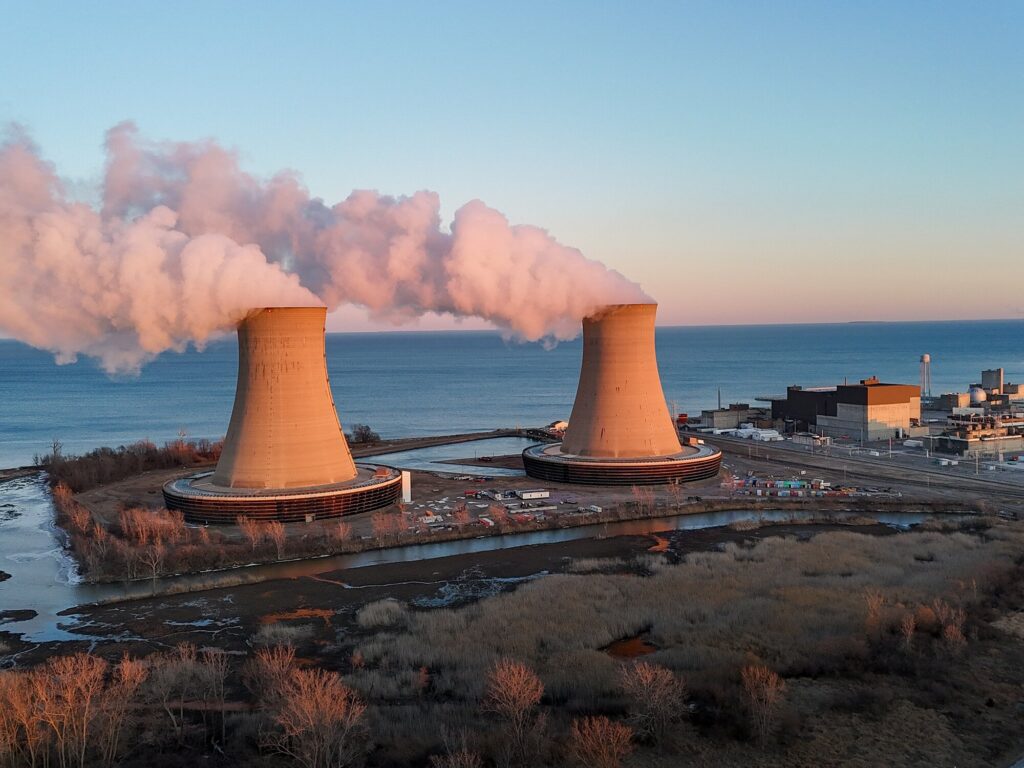
    The Rachel Carson Council has repeatedly opposed the use of zero carbon nuclear energy. 1 2 3

    Advocacy

    Federalization of Elections

    Rachel Carson Council supported the passage of legislation which would have consolidated electoral matters under federal jurisdiction. RCC called for the “strongest possible version” of the bill, while other left-of-center organizations like the ACLU condemned the bill, arguing that it would “unconstitutionally burden speech and associational rights.” 4 5 6

    Opposition to Nuclear Energy

    The Rachel Carson Council has repeatedly opposed the use of nuclear energy. Nuclear power plants produce no carbon dioxide or other greenhouse gas emissions, and as of 2021 accounted for 19 percent of American electricity production—the largest source of zero carbon electricity in the United States. 7 An October 2018 proposal from The Nature Conservancy noted that zero-carbon nuclear plants produced 7.8 percent of total world energy output and recommended reducing carbon emissions by increasing nuclear capacity to 33 percent of total world energy output. 8

    Rachel Carson Council was one of more than 600 co-signing organizations on a January 2019 open letter to Congress titled “Legislation to Address the Urgent Threat of Climate Change.” The signatories declared their support for new laws to bring about “100 percent decarbonization” of the transportation sector but denounced nuclear power as an example of “dirty energy” that should not be included in any legislation promoting the use of so-called “renewable energy.” 2

    Rachel Carson Council was one of more than 100 co-signatories on a November 2020 letter to the U.S. Senate that expressed opposition to S. 4897, the “American Nuclear Infrastructure Act of 2020.” The letter stated that nuclear power “amplifies and expands the dangers of climate change” and denounced it as an example of “false solutions to the climate crisis that perpetuate our reliance on dirty energy industries.” 3

    In May of 2021, Rachel Carson Council was one of 715 groups and businesses listed as a co-signer on a letter to the leadership of the U.S. House and Senate that referred to nuclear energy as a “dirty” form of energy production and a “significant” source of pollution. The letter asked federal lawmakers to reduce carbon emissions by creating a “renewable electricity standard” that promoted production of weather dependent power sources such as wind turbines and solar panels, but did not promote low carbon natural gas and zero carbon nuclear energy. 1

    Reports

    Wood Pellet Production

    In January 2019, Rachel Carson Council published a report accusing forestry biofuel organization Enviva of creating an “unnecessary” product that was particularly harmful to “communities of color.” The report was criticized for fabricating misleading and erroneous claims. 9 The report also calls for supporting various left-wing organizations to take legal action against Enviva and the wood pellet industry, including Environmental Integrity Project, Southern Environmental Law Center, Clean Air Carolina, and Natural Resources Defense Council. The report also criticizes the European Union’s 2020 Renewable Energy Directive for defining wood pellet industry as “renewable,” and partners with Dogwood Alliance to oppose the use of trees as an energy source. 10 11

    The Atlantic Coast Pipeline

    Rachel Carson Council opposes the construction of the Atlantic Coast Pipeline, working with the Sierra Club to oppose its construction, and lobbying for legal action that led to an appeal before the U.S Supreme Court as of October 2019. 12 13 14

    Pork farming

    Rachel Carson Council opposes large hog farms by opposing bills written to protect the property rights and safety of farmers and their livestock. 15 16

    RCC also works to prevent poultry and pork farming in association with Food and Water Watch (FWW) and Waterkeeper Alliance. It also works with North Carolina Workers’ Center, which partners with the AFL-CIO labor union federation to demand higher wages for employees on livestock farms and to accuse farms of supposed “wage theft”. 17

    RCC supports regulations proposed by the left-wing Government Accountability Project and the Humane Society of the United States,18 a vegan advocacy organization. 19

    Funding

    The Foundation for the Carolinas, a donor-advised fund provider which reportedly has been used by controversial environmentalist grant-maker Fred Stanback,20 has provided six-figure contributions to Rachel Carson Council. 21

    MARPAT Foundation donated $10,000 to Rachel Carson Council in September 2018. 22

    Financial Statistics

    Total Assets

    Total Revenue

    Total Expenses

    YearTotal AssetsTotal RevenueTotal ExpensesFiling
    2025 $8,254,822 $3,621,641 $914,443 View
    2024 $5,327,401 $2,380,146 $673,017 View
    2023 $3,537,596 $2,226,029 $557,468 View
    2022 $1,847,562 $953,646 $337,053 View
    2021 $1,233,902 $735,615 $165,904 View
    2020 $653,721 $281,089 $196,363 View

    Prior year filings: 2017, 2015, 2014, 2013, 2012, 2011

    Revenue Detail

    Expenses Detail

    Employee Compensation

    • Number of Employees: 7

    Highest Earning Employees

    EmployeeTitleTotal Compensation
    Robert K MusilPresident and CEO$68,174

    Grant Activity

    All-time grants received statistics from Candid dataset:

    • Total Grant Value: $7,299,871
    • Number of Grants: 55
    • Number of Funders: 17

    Selection of highest value grants received from the last seven years:

    AmountYearFunderSubject
    $2,125,0002024 Foundation For The CarolinasCHARITABLE GIFT
    $1,475,0002023 Foundation For The CarolinasCHARITABLE GIFT
    $1,450,0002022 Foundation For The CarolinasCHARITABLE GIFT
    $1,020,0002025 Vanguard CharitableFOR RECIPIENT'S EXEMPT PURPOSE
    $630,0002021 Foundation For The CarolinasCHARITABLE GIFT
    $175,0002020 Foundation For The CarolinasCHARITABLE GIFT
    $15,0002023 Vanguard CharitableFOR RECIPIENT'S EXEMPT PURPOSE
    $10,2002021 Fidelity Investments Charitable Gift FundFor grant recipient's exempt purposes
    $5,0002022 Motch Family Foundation IncGENERAL PURPOSE
    $4,5002023 The Moore Charitable Foundation Inc C/o Moore Capital ManagementAN UNRESTRICTED GRANT TO FURTHER THE DONEE'S EXEMPT PURPOSE
    $4,0002022 John W Pope FoundationUNRESTRICTED
    $3,5002022 The Moore Charitable Foundation Inc C/o Moore Capital ManagementAn Unrestricted Grant To Further The Donee's Exempt Purpose
    $3,1002025 John W Pope FoundationUNRESTRICTED
    $3,1002024 John W Pope FoundationUNRESTRICTED
    $3,0002024 Paul J Straley & Marjorie I Straley Charitable FoundationEducate to safeguard theenvironment
    $3,0002023 Paul J Straley & Marjorie I Straley Charitable FoundationEducate to safeguard theenvironment
    $3,0002021 John W Pope FoundationUNRESTRICTED
    $2,6002023 John W Pope FoundationUNRESTRICTED
    $2,5002021 Paul J Straley & Marjorie I Straley Charitable FoundationEDUCATE TO SAFEGUARD THE ENVIRONMENT
    $2,0002025 Paul J Straley & Marjorie I Straley Charitable FoundationEducate to safeguard theenvironment
    $2,0002022 Paul J Straley & Marjorie I Straley Charitable FoundationEDUCATE TO SAFEGUARD THE ENVIRONMENT
    $2,0002020 John W Pope FoundationUnrestricted
    $1,5002020 Paul J Straley & Marjorie I Straley Charitable FoundationEDUCATE TO SAFEGUARD THE ENVIRONMENT
    $1,0002021 The More Life FoundationFUNDRAISING

    Associated Influence Networks

    View Opposition to Nuclear Energy

    Opposition to Nuclear Energy

    There are more than 700 nonprofits and other advocacy groups in the United States that oppose the use of carbon free nuclear energy.    …

    References

    1. Letter from Center for Biological Diversity et. al. to U.S. Senate Majority Leader Chuck Schumer, U.S. House Speaker Nancy Pelosi, Sen. Joe Manchin, and Rep. Frank Pallone. “RE: CONGRESS SHOULD ENACT A FEDERAL RENEWABLE ELECTRICITY STANDARD AND REJECT GAS AND FALSE SOLUTIONS.” May 12, 2021. Accessed July 25, 2023. https://www.biologicaldiversity.org/programs/energy-justice/pdfs/2021-5-12_600-Group-Letter-for-RES.pdf?_gl=1*1c9h3t8*_gcl_au*MTc3NjM3MTM1Mi4xNjg5OTU1MzAz
    2. “Group letter to Congress urging Green New Deal passage.” Earthworks. January 10, 2019. Accessed August 12, 2021. https://www.earthworks.org/publications/group-letter-to-congress-urging-green-new-deal-passage/
    3. “Dear Chairman Barrasso, Ranking Member Carper, and Members of the Committee.” November 30, 2020. Accessed August 14, 2023. https://foe.org/wp-content/uploads/2020/12/Sign-on_S4897_OPPOSE_119-orgs-3.pdf
    4. “Tell the U.S. Senate: We demand a democracy that works for us.” Rachel Carson Council. 2019. Accessed November 9, 2019. https://rachelcarsoncouncil.org/tell-u-s-senate-demand-democracy-works-us/?eType=EmailBlastContent&eId=2a512fc9-7205-40af-bee2-be76425bb3d3
    5. Dinan, Stephen. “ACLU blasts Democrats’ election bill as unconstitutional.” The Washington Times. March 4, 2019. Accessed November 9, 2019. https://www.washingtontimes.com/news/2019/mar/4/hr-1-democrats-election-reform-bill-unconstitution/
    6. “ACLU Letter Opposing H.R. 1 (For the People Act of 2019).” ACLU. March 6, 2019. https://www.aclu.org/aclu-letter-opposing-hr-1-people-act-2019
    7. “Nuclear explained.” U.S. Energy Information Administration. Accessed August 16, 2021. https://www.eia.gov/energyexplained/nuclear/us-nuclear-industry.php>
    8. “ The Science of Sustainability.” The Nature Conservancy. October 13, 2018. Accessed August 16, 2021. https://www.nature.org/en-us/what-we-do/our-insights/perspectives/the-science-of-sustainability/
    9. Hibbs, Mark. “Report Blasts Wood Pellet Industry’s Effects.” Coastal Review Online. January 18, 2019. Accessed November 9, 2019. https://www.coastalreview.org/2019/01/report-blasts-wood-pellet-industrys-effects/
    10. “Clear Cut: A Guide to Enviva, Environmental Justice, and Civic Action against the Wood Pellet Industry.” Rachel Carson Council. July 2019. Accessed November 9, 2019. https://rachelcarsoncouncil.org/wp-content/uploads/2019/07/clear_cut_fact_sheet_web.pdf
    11. “Directive 2009/28/EC of the European Parliament and of the Council of 23 April 2009.” Office Journal of the European Union. May 6, 2009. Accessed November 9, 2019. https://eur-lex.europa.eu/legal-content/EN/TXT/PDF/?uri=CELEX:32009L0028&from=EN
    12. Hansley, Caroline. “Blowback: Why the Once-Inevitable Atlantic Coast Pipeline’s Future Is in Doubt.” Sierra Club. December 6, 2017. Accessed November 9, 2019. https://www.sierraclub.org/compass/2017/12/blowback-why-once-inevitable-atlantic-coast-pipeline-s-future-doubt
    13. “Local and citizen groups object to DEQ’s flawed permit for $5.5 Billion Atlantic Coast Pipeline.” Southern Environmental Law Center. November 20, 2017. Accessed November 9, 2019. https://www.southernenvironment.org/news-and-press/press-releases/local-and-citizen-groups-object-to-deqs-flawed-permit-for-5.5-billion-atlan
    14. Gilmer, Ellen M. “Dominion’s Atlantic Coast Pipeline Gets Supreme Court Hearing (2).” Bloomberg Law. October 4, 2019. Accessed November 9, 2019. https://news.bloomberglaw.com/us-law-week/dominions-atlantic-coast-pipeline-gets-supreme-court-hearing
    15. Houghton, Emily. “The truth about Ag-gag laws: why the focus should shift to gaining customer trust.” The Pig Site. January 17, 2018. Accessed November 9, 2019. https://thepigsite.com/articles/the-truth-about-aggag-laws-why-the-focus-should-shift-to-gaining-consumer-trust
    16. “Pork and Pollution: A Guide to Health, Environmental Justice and Civic Action around Industrial Hog Operations.” Rachel Carson Council. May 2018. Accessed November 9, 2019. https://rachelcarsoncouncil.org/wp-content/uploads/2019/07/pork_and_pollution_fact_sheet_web.pdf
    17. “Our Programs.” Western North Carolina Workers’ Center. 2019. Accessed November 9, 2019. https://wncworkerscenter.org/programs/
    18. Prescott, Matthew. “HSUS Agrees with Animal Agriculture Alliance advice.” WATTAgNet. February 16, 2017. Accessed November 9, 2019. https://www.wattagnet.com/articles/29834-hsus-agrees-with-animal-agriculture-alliances-advice
    19. Eule, Joseph. “The Humane Society’s Descent Into Abolitionist Veganism.” Washington Examiner, October 31, 2016. https://www.washingtonexaminer.com/weekly-standard/the-humane-societys-descent-into-abolitionist-veganism.
    20. Braun, Ken. “Anti-Humanist Environmentalism: Stanback’s Piggy-Bank.” Capital Research Center. Capital Research Center, July 17, 2019. https://capitalresearch.org/article/anti-humanist-environmentalism-stanbacks-piggy-bank/.
    21. Data compiled by FoundationSearch.com subscription service, a project of Metasoft Systems, Inc., from forms filed with the IRS. Queries conducted November 13, 2019.
    22. “Rachel Carson Council, Inc.” MARPAT Foundation. 2019. Accessed November 9, 2019. http://fdnweb.org/marpat/grants/rachel-carson-council-inc/