

Center for Food Safety
The Center for Food Safety (CFS) is a left-of-center, environmentalist nonprofit based in Washington, D.C. The organization has opposed the use of zero carbon nuclear energy and biotechnology, especially the production of genetically engineered (GE) foods. 1 CFS has lobbied the federal government in support of bills to require the labeling of GE foods. 2 CFS also maintains an office in San Francisco, California and has successfully lobbied the state of California to impose regulations against certain biotechnologies. 3 4
Contents
CFS also launches legal campaigns to limit the production of GE foods and increase the power of the government to regulate agriculture and food production. CFS has sued both Democratic and Republican presidential administrations in order to pursue increased food regulations. In 2006, CFS initiated the lawsuit that developed into the Supreme Court case of Monsanto v. Geertson Seed Farms. In the case, CFS sought to stop the planting of genetically engineered alfalfa crops. 5
CFS and its leadership have come under criticism for their lack of complexity in discussing the science regarding GE foods. 6 7 8 The Genetic Literacy Project has reported that CFS helped to spread a later-debunked theory that “mad cow” disease was solely the result of genetically engineered livestock. 9 CFS has also been criticized in a report published by the American Enterprise Institute as portraying its anti-biotechnology cause as having broad grassroots support when it is actually funded by wealthy, left-of-center foundations. 10
Founding and Leadership
Andrew Kimbrell founded the International Center for Technology Assessment (CTA) in 1994. In 1997, Kimbrell created the Center for Food Safety as a separate organization, though the two nonprofits continued to use the same office space, and Kimbrell remained the executive director of both organizations. 9 11 3 Kimbrell previously worked as a policy director for the Foundation on Economic Trends, a nonprofit run by economist and environmentalist author Jeremy Rifkin. 12 13 For decades, Rifkin has advocated against traditional sources of energy production, against genetically engineered food, and against the production of beef, but his work has frequently been criticized by scientists for its lack of academic rigor. 14 15 16
Kimbrell is an attorney who has launched multiple lawsuits aimed at expanding the federal government’s power to regulate the economy and inhibit the production of genetically engineered food. 3 7 Kimbrell has advocated for the government-mandated labelling of genetically engineered food. 17 According to tax documents, Kimbrell received $187,425 in compensation from CFS in 2018. 18
Rebecca Spector, west coast director for CFS, previously worked as the director of development for Green Seal, an “ecolabeling” organization that works with federal, state, and local governments to label products based on standards of environmental impact developed by Green Seal. 19 20 In her work with CFS, Spector has successfully lobbied the state of California to limit the production of genetically engineered fish. 3
George Kimbrell, legal director for CFS, filed suit in the case that developed into the Supreme Court case Monsanto v. Geertson Seed Farms. In the case, CFS sought to stop the planting of genetically engineered alfalfa crops. 21 22 3 5
The CFS Board of Directors contains many members with decades of experience in opposing biotechnology. Deborah Koons Garcia wrote and directed the 2004 anti-GE film The Future of Food, in which Kimbrell appeared. 23 The film has been criticized as a “propaganda documentary” by The Denver Post, “one-sided” by The Hollywood Reporter, and “partisan” by Variety. 24 25 26
Adele Douglass founded Humane Farm Animal Care, a nonprofit that labels animal products as “certified humane” based on standards for the treatment of farm animals developed by Humane Farm Animal Care. 27
Randy Hayes was a founder and former president of the Rainforest Action Network, a left-of-center environmentalist organization. 28 Hayes also founded Foundation Earth, an environmentalist think tank that encourages elementary school students to take a “Pledge of Allegiance to the Earth.” 29
Dan Imhoff founded the Wild Farm Alliance, an organization that opposes industrialized farming techniques. 30 He has written numerous environmentalist books and articles, and his work has been published in The Atlantic. 31 32 33
George Naylor is a former president of the National Family Farm Coalition, an organization that supports increased government regulation of the agricultural and meat-packing sectors. 34 23
Political Activism
The Center for Food Safety has engaged in legal action and lobbying to achieve its goals. In the state of California, CFS has employed the lobbying group Fearless Advocacy. On behalf of CFS, Fearless Advocacy has lobbied the government of California in support of anti-biotechnology, left-of-center environmentalist regulations. 35 36 3 Since 2015, CFS has paid over $360,000 to Fearless Advocacy for its services. 35
CFS also lobbies the federal government. According to available information, CFS spent $140,000 lobbying in support of bills to mandate the labeling of GE foods between 2013 and 2016 alone. 2 37 CFS also has a sister advocacy organization, the Center for Food Safety Action Fund. 38 However, according to tax documents, the CFS Action Fund only took in $15,150 in revenue and reported net losses of $239,595 in 2018. 39
CFS is also affiliated with the Hawai’i Center for Food Safety Action Fund. The group opposes GE-seeds and foods in the state of Hawaii. 40 41
CFS brings lawsuits to advance its anti-GE goals. CFS often partners with the left-of-center, public interest law firm Earthjustice in these lawsuits. 9 In 2006, CFS filed suit in the case that developed into the Supreme Court case Monsanto v. Geertson Seed Farms. In the case, CFS sought to stop the planting of genetically engineered alfalfa crops. 21 22 3 5
In 2016, CFS and Earthjustice sued the Food and Drug Administration (FDA) to overturn the FDA’s approval of genetically engineered salmon. 42 In 2020, CFS sued the U.S. Department of Agriculture (USDA) to challenge the USDA’s decision not to require on-package labeling of most genetically engineered foods. 43
CFS also writes amicus curie briefs in environmentalist lawsuit. In 2013, CFS filed an amicus curie brief in the Supreme Court case Bowman v. Monsanto, a case challenging the patent rights of Monsanto over its genetically engineered seeds. 44 The Supreme Court ruled unanimously in favor of Monsanto and against the position supported by CFS. 45
Aside from its litigation work, CFS engages in public advocacy campaigns to influence public opinion against genetically engineered foods. In 1999, Andrew Kimbrell sat on the board that helped design the Turning Point campaign, an anti-GE communications campaign funded by the Foundation for Deep Ecology. 46 The campaign printed advertisements in newspapers with shocking, fear-provoking headlines, including the “Extinction Crisis,” “Genetic Roulette,” and “Who plays God in the 21st century?”. 47 The CFS website currently has a “Take Action” section with links for users to send automatic form letters to their members of Congress to express anti-biotechnology opinions. 48 49
In 2021, CFS opposed former U.S. Secretary of Agriculture Tom Vilsack’s nomination to his old position by President Joe Biden. 50
Controversy
According to the Genetic Literacy Project, the Center for Food Safety spread a later debunked theory that “mad cow” disease was exclusively the result of genetically engineered livestock. 9
Scientists have held that the issues of chemical compounds in natural and genetically engineered foods are much more complicated than advocates like CFS present. 8 Andrew Kimbrell has been criticized on Biology Fortified, a pro-biotechnology blog, as using “jargon” in order to obscure the proven benefits of genetic modification. 51
In 2003, the center-right American Enterprise Institute (AEI) criticized CFS in a report that was later reprinted as a chapter of a book published by AEI, Let Them Eat Precaution. 52 The report criticized Andrew Kimbrell and CFS for being linked in leadership to dozens of “independent” organizations that in total possessed “tens of millions of dollars.” The piece accused anti-biotechnology advocates of frequently forming and dissolving new organizations to “avoid prolonged public scrutiny” and portray their cause as having broad grassroots support when it was really funded by wealthy, left-progressive foundations. 10
Opposition to Nuclear Energy
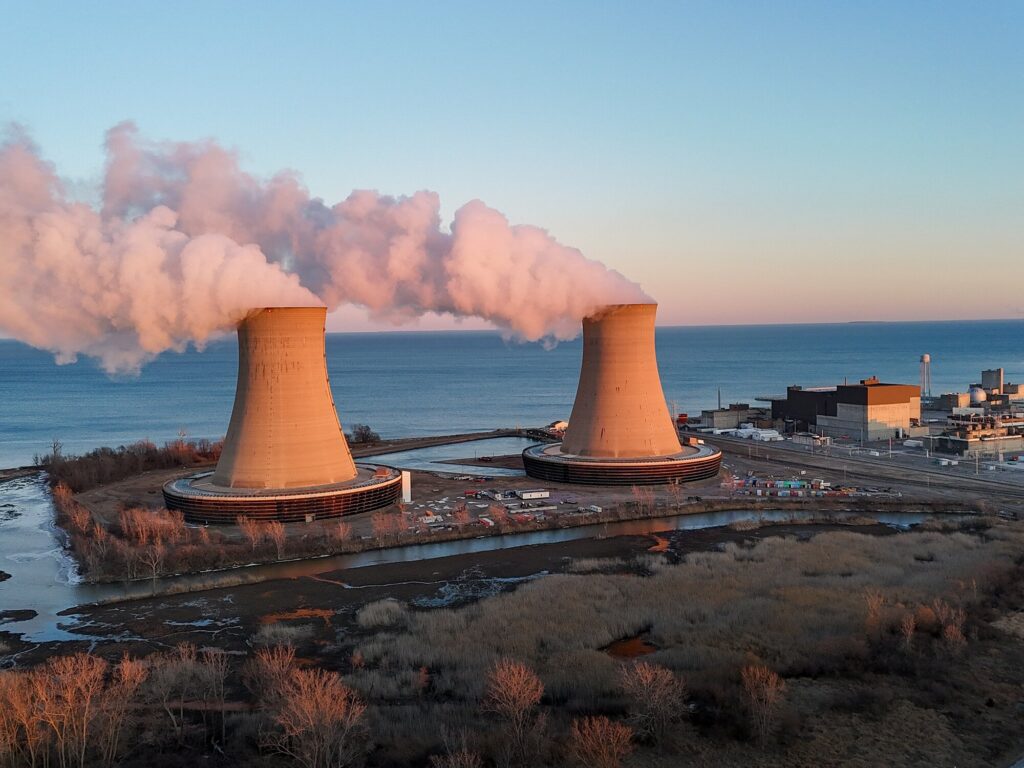
In May of 2021, Center for Food Safety was one of 715 groups and businesses listed as a co-signer on a letter to the leadership of the U.S. House and Senate that referred to nuclear energy as a “dirty” form of energy production and a “significant” source of pollution. The letter asked federal lawmakers to reduce carbon emissions by creating a “renewable electricity standard” that promoted production of weather dependent power sources such as wind turbines and solar panels, but did not promote low carbon natural gas and zero carbon nuclear energy. 53
Nuclear power plants produce no carbon dioxide or other greenhouse gas emissions, and as of 2021 accounted for 19 percent of American electricity production—the largest source of zero carbon electricity in the United States. 54 An October 2018 proposal from The Nature Conservancy noted that zero-carbon nuclear plants produced 7.8 percent of total world energy output and recommended reducing carbon emissions by increasing nuclear capacity to 33 percent of total world energy output. 55
Funding
In 2018, CFS had revenues totaling $3,539,790. 18 According to the Genetic Literacy Project, the Center for Food Safety has “strong financial ties to the organic and natural products industries.” 9 The Center for Food Safety has also received funding from many left-of-center and environmentalist organizations, including Patagonia, Rockefeller Philanthropy Advisors, the Alida R. Messinger Charitable Lead Trust, the David and Lucile Packard Foundation, the Park Foundation, the Marisla Foundation, the Panta Rhea Foundation, the Firedoll Foundation, the Educational Foundation of America, the Compton Foundation, the Columbia Foundation, the Boston Foundation, and the Foundation for Deep Ecology. 9
Financial Statistics
Total Assets
Total Revenue
Total Expenses
| Year | Total Assets | Total Revenue | Total Expenses | Filing |
|---|---|---|---|---|
| 2024 | $3,172,058 | $4,330,556 | $3,150,566 | View |
| 2023 | $1,602,063 | $2,997,319 | $4,001,171 | View |
| 2022 | $1,889,616 | $3,194,588 | $3,977,790 | View |
| 2021 | $3,028,407 | $4,782,800 | $3,732,624 | View |
| 2020 | $1,956,784 | $2,323,614 | $3,662,664 | View |
Prior year filings: 2018, 2017, 2016, 2015, 2014, 2013, 2012, 2011, 2010
Revenue Detail
Expenses Detail
Employee Compensation
Highest Earning Employees
| Employee | Title | Total Compensation |
|---|---|---|
| George Kimbrell | Co Executive Director/Legal Director | $201,099 |
| Sylvia Wu | Co Executive Director | $175,007 |
| Ashley Lukens | Director of Digital Communication | $129,389 |
| Amy Van Saun | Senior Attorney | $107,366 |
Grant Activity
All-time grants received statistics from Candid dataset:
- Total Grant Value: $28,714,525
- Number of Grants: 565
- Number of Funders: 138
Selection of highest value grants received from the last seven years:
All-time grants given statistics from Candid dataset:
- Total Grant Value: $827,000
- Number of Grants: 12
- Number of Recipients: 6
Selection of highest value grants given from the last seven years:
Mentioned in this Article
- Alida Messinger
- American Enterprise Institute
- Boston Foundation
- Columbia Foundation
- Compton Foundation
- David and Lucile Packard Foundation
- Department of Agriculture
- Earthjustice
- Educational Foundation of America (EFA)
- Firedoll Foundation
- Food and Drug Administration (FDA)
- Foundation for Deep Ecology
- International Center for Technology Assessment
- Joe Biden
- Marisla Foundation
- Panta Rhea Foundation
- Park Foundation
- Patagonia Org
- Rainforest Action Network (RAN)
- The Atlantic
- The Nature Conservancy (TNC)
Associated Influence Networks
Opposition to Nuclear Energy
There are more than 700 nonprofits and other advocacy groups in the United States that oppose the use of carbon free nuclear energy. …