


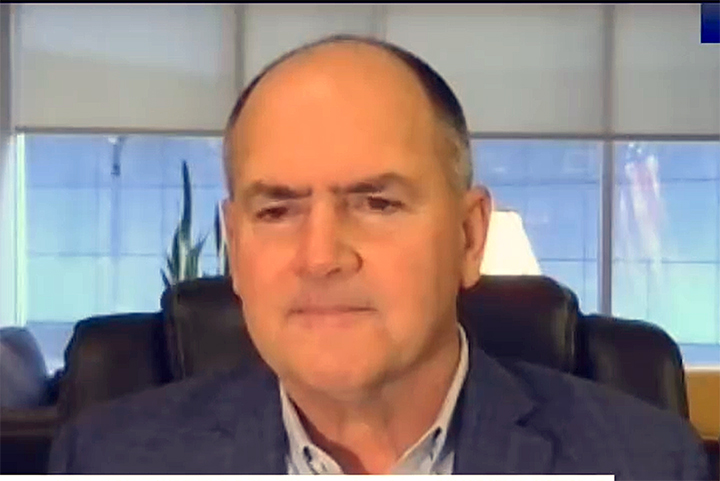
Zach Wamp is a retired former Republican Congressman who, from 1995 to 2011, represented Tennessee’s 3rd Congressional District in the U.S. House of Representatives. During his tenure, he served on the Committee on Appropriations and was a member of the right-leaning Liberty Caucus (also known as the Liberty Committee). In 2010, Wamp placed second in the Tennessee Republican gubernatorial primary. 1
In 2020, while working in coordination with Issue One, a left-of-center organization closely aligned with the liberal Democracy Alliance, Wamp helped to created the National Council on Election Integrity to oversee the 2020 Presidential Election results. 2
Background
Prior to becoming involved in politics, Zach Wamp worked as a national sales supervisor for Olan Mills, a Chattanooga-based photography company specializing in the production of church directories. Later, Wamp transitioned into commercial and industrial real estate brokerage. In 1983, Wamp was precinct vice chairman and youth coordinator for the 1983 Chattanooga mayoral campaign of Republican Gene Roberts. 34
In 1989, Wamp worked as vice president of Charter Real Estate Corporation (now known as NAI Charter), an architectural and real estate development firm in Chattanooga. That year, Wamp became the regional director of the Tennessee Republican Party. In 1992, Wamp joined the Fletcher Bright Corporation in Tennessee as a real estate broker. 56
U.S. House of Representatives
In 1992, Wamp ran on the Republican ticket for the House of Representatives from Tennessee’s against nine-term Democratic incumbent U.S. Representative Marilyn Lloyd and lost by a close margin. In 1994, when Rep. Lloyd declined to run for reelection, Wamp ran again, defeating Republican State Representative Kenneth J. Meyer in the primary and defeating former Tennessee Democratic Party chairman Randy Button in the general election. During the campaign, Wamp promised that if elected, he would serve no more than six terms. 78
During his tenure in the House of Representatives, Wamp served on the Committee on Appropriations and two of its subcommittees: the Subcomittee on Energy and Water Development and the Subcommittee on Military Construction, Veterans Affairs, and Related Agencies. While working with the committee, Wamp supported substantial legislation to fund the Chickamauga Dam, located in his congressional district, and the Tennessee Valley Authority, a federally owned corporation chartered to provide public works and economic development in the Tennessee Valley. 910 Wamp was also a member of the right-leaning Liberty Caucus (also known as the Liberty Committee). 11
Though he had pledged to serve no more than six terms, Wamp successfully ran for reelection in 2006 and 2008. 12
2010 Gubernatorial Primary
On January 5, 2009, Wamp announced his intention to run in the 2010 Tennessee gubernatorial election. 13 On July 23, 2010, Wamp made controversial statements in an interview regarding the feasibility of government-run healthcare proposals offered during the Obama administration and the possibility of state-level secession. 14 On August 5, 2010, Wamp lost to Bill Haslam in the primary election, who went on to serve as Governor of Tennessee from 2010 to 2018. 15
2020 U.S. Presidential Election
On February 4, 2021, Time published an article titled, “Shadow Campaign that Saved the 2020 Election,” which reported how Wamp helped coordinate a “bipartisan election-protection council” with advocacy organization Issue One over the integrity of the 2020 Presidential Election. 16 Dubbed “The National Council on Election Integrity,” the group was made from 22 Republican and 22 Democrats that held weekly meetings via Zoom, ran advertisements, made official statements, wrote articles, and contacted local officials regarding the election. Wamp commented, “We had rabid Trump supporters who agreed to serve on the council based on the idea that this is honest…whichever way it cuts, we’re going to stick together.” 17 In addition, the article discusses how one of those contacted by Wamp was former U.S. Representative Mike Rogers, whom had previously published an op-ed for local newspapers in Detroit calling for election officials to, “honor the will of the voters.” 18
References
- Hightower, Cliff and Andy Sher. “It’s Haslam v. WcWherter.” Chattanooga Times Free Press. August 6, 2010. Accessed February 15, 2021. https://www.timesfreepress.com/news/politics/state/story/2010/aug/06/its-haslam-vs-mcwherter/25626/
- Ball, Molly. “The Secret History of the Shadow Campaign That Saved the 2020 Election.” Time. February 4, 2021. Accessed February 15, 2021. https://time.com/5936036/secret-2020-election-campaign/
- Humphrey, Tom. “Wamp says he can build relationships; stresses passion.” Knoxville News Sentinel. July 10, 2010. Accessed February 15, 2021. https://archive.knoxnews.com/news/wamp-says-he-can-build-relationships-stresses-passion-ep-408099122-358639281.html/
- “Background Information on Key Members of Congress.” Council for American Private Education. Accessed February 15, 2021.
- Humphrey, Tom. “Wamp says he can build relationships; stresses passion.” Knoxville News Sentinel. July 10, 2010. Accessed February 15, 2021. https://archive.knoxnews.com/news/wamp-says-he-can-build-relationships-stresses-passion-ep-408099122-358639281.html/
- “Background Information on Key Members of Congress.” Council for American Private Education. Accessed February 15, 2021.
- Cillizza, Chris. “A Look at Tennessee.” Roll Call. October 20, 2003. Accessed February 15, 2021. https://www.rollcall.com/2003/10/20/a-look-at-tennessee/
- [1] Humphrey, Tom. “Wamp says he can build relationships; stresses passion.” Knoxville News Sentinel. July 10, 2010. Accessed February 15, 2021. https://archive.knoxnews.com/news/wamp-says-he-can-build-relationships-stresses-passion-ep-408099122-358639281.html/
- “Chickamauga Dam’s vital lock.” Chattanooga Times Free Press. October 3, 2009. Accessed February 15, 2021. https://www.timesfreepress.com/news/opinion/freepress/story/2009/oct/03/chickamauga-dams-vital-lock/237296/
- “U.S. Congressman Zach Wamp Pledges Continued Support for Chickamauga Lock.” Tennessee River Valley Association. Accessed February 15, 2021. http://www.trva-tcwc.org/u-s-congressman-zach-wamp-pledges-continued-support-for-chickamauga-lock/
- “Press Release: Wamp Signs ‘Contract from America.’” Contract From America Foundation (archived by Tennessee News). July 22, 2010. Accessed February 15, 2021. https://tnreport.com/2010/07/22/wamp-signs-contract-from-america/
- Humphrey, Tom. “Wamp says he can build relationships; stresses passion.” Knoxville News Sentinel. July 10, 2010. Accessed February 15, 2021. https://archive.knoxnews.com/news/wamp-says-he-can-build-relationships-stresses-passion-ep-408099122-358639281.html/
- Wilson, Matt and Andy Sher. “Update: Rep. Wamp will seek governor’s seat, asks local Pachyderm Club for support.” Chattanooga Times Free Press. January 5, 2009. Accessed February 15, 2021. https://www.timesfreepress.com/news/local/story/2009/jan/05/rep-wamp-will-run-governor-tennessee/202468/
- Kolawole, Emi. “GOP Rep. Zach Wamp talks of secession.” Washington Post. July 23, 2010. February 15, 2021. http://hotlineoncall.nationaljournal.com/archives/2010/07/health_care_law.php
- Hightower, Cliff and Andy Sher. “It’s Haslam v. WcWherter.” Chattanooga Times Free Press. August 6, 2010. Accessed February 15, 2021. https://www.timesfreepress.com/news/politics/state/story/2010/aug/06/its-haslam-vs-mcwherter/25626/
- Ball, Molly. “The Secret History of the Shadow Campaign That Saved the 2020 Election.” Time. February 4, 2021. https://time.com/5936036/secret-2020-election-campaign/
- Ball, Molly. “The Secret History of the Shadow Campaign That Saved the 2020 Election.” Time. February 4, 2021. https://time.com/5936036/secret-2020-election-campaign/
- Ball, Molly. “The Secret History of the Shadow Campaign That Saved the 2020 Election.” Time. February 4, 2021. https://time.com/5936036/secret-2020-election-campaign/